Leaks & Water
Why Is Water Coming Into My Fireplace When It Rains or Snows?
Find the common causes of chimney leaks in Colorado, including caps, crowns, flashing, masonry, chase covers and snowmelt—and why diagnosis matters.
Water inside a fireplace is a symptom, not a diagnosis.
The source may be directly above the flue, at the chimney crown, around the roof flashing, through deteriorated masonry or from a metal chase cover. In Colorado, snow accumulation and freeze-thaw cycles can make a small defect more noticeable over time.
The best repair depends on finding the actual entry path.
1. Missing or damaged chimney cap
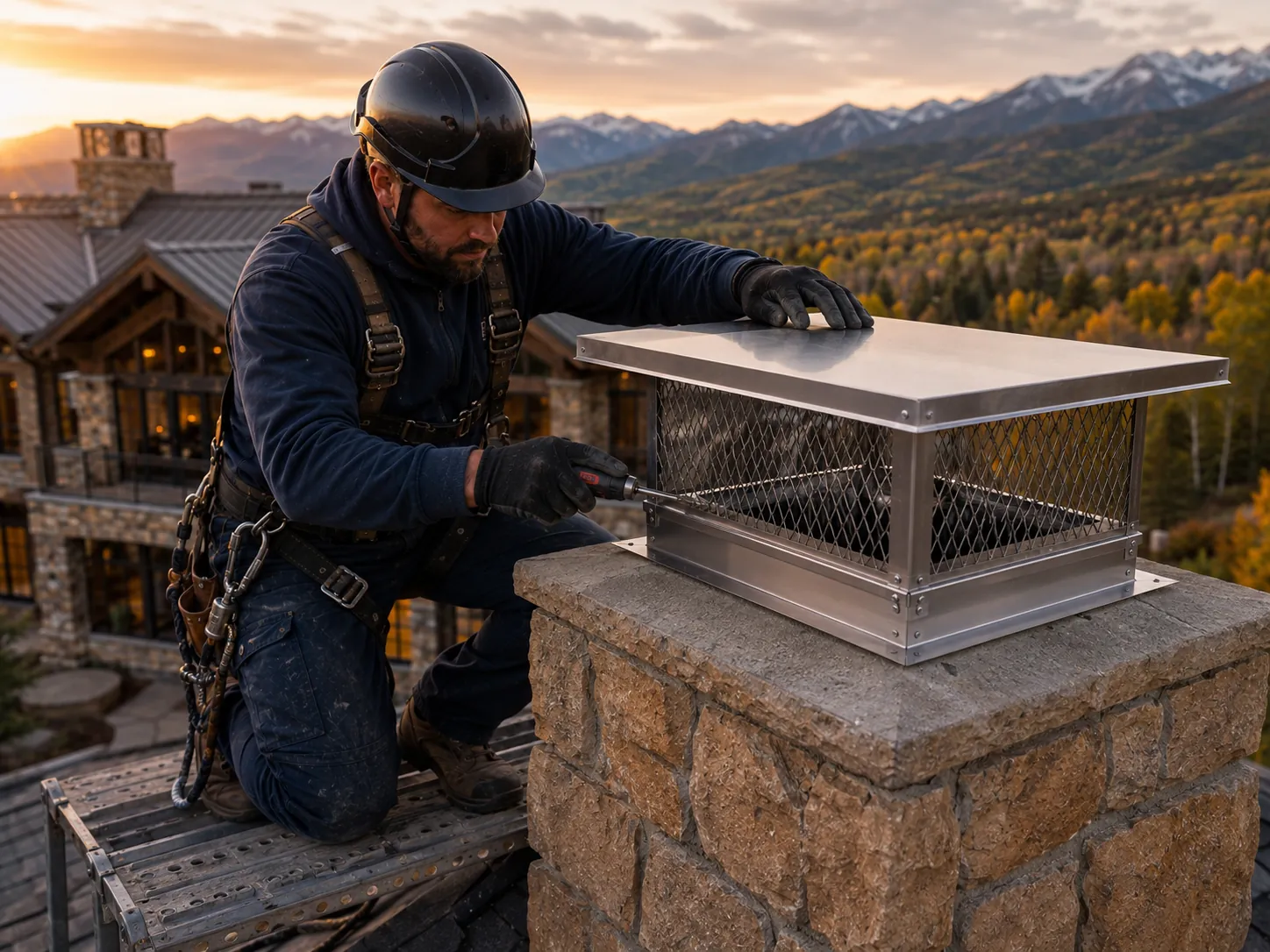
An open flue gives rain and snow a direct path into the chimney. A properly designed cap helps reduce direct precipitation entry and can also keep out debris and animals.
If the cap is missing after a wind or hail event, water entry may be obvious. If the cap is present but damaged or undersized, the problem can be more subtle.
2. Cracked chimney crown
The crown covers the top of a masonry chimney around the flue and should shed water away from the structure.
Cracks can allow water into the chimney assembly. In a freezing climate, moisture entering those defects can contribute to further deterioration.
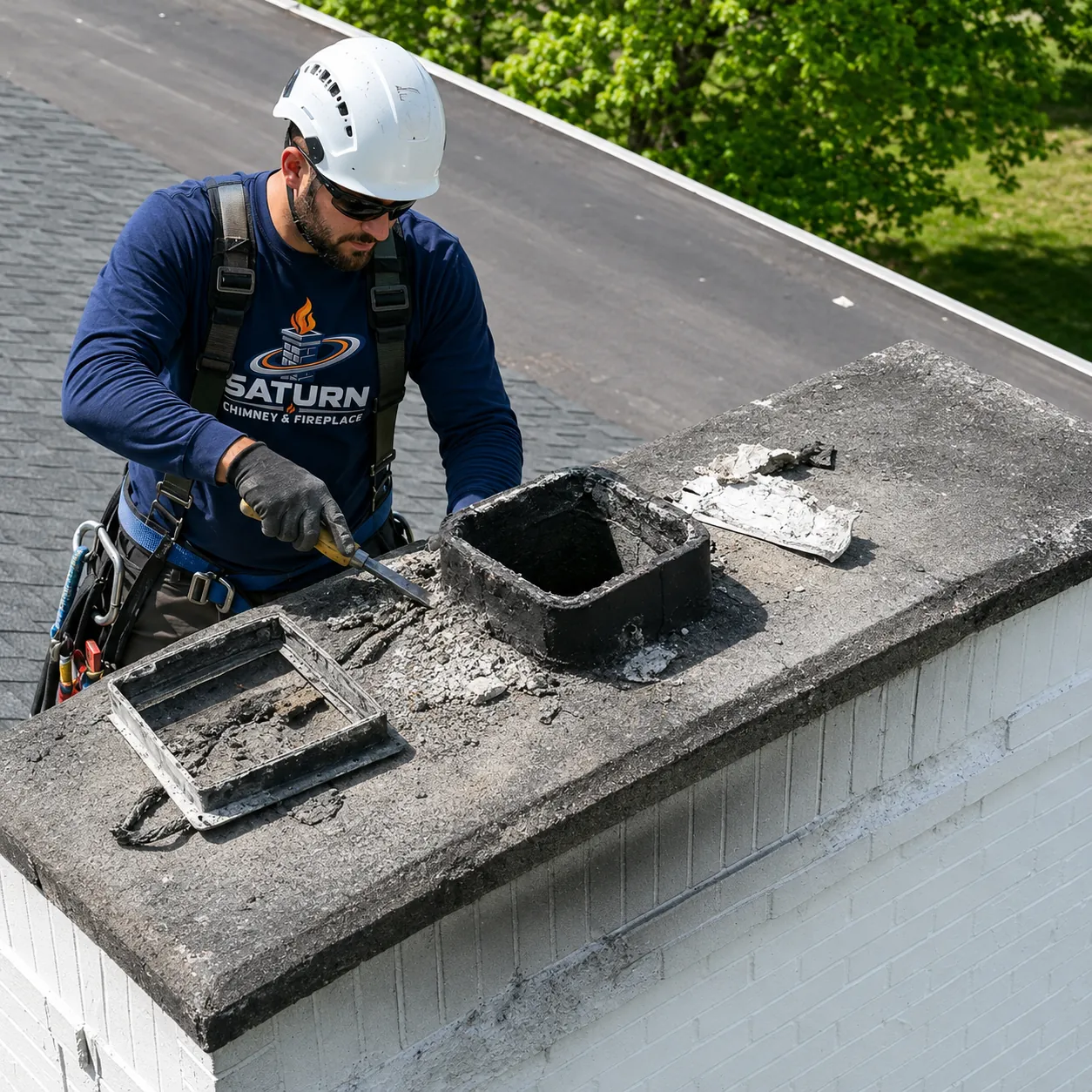
Small crown cracks may be repairable. Extensive failure may require a larger crown repair or replacement. The scope should match the condition.
3. Failed flashing
Flashing seals the transition where the chimney passes through the roof. When step flashing, counterflashing or seal details fail, water can run into the roof assembly and appear near the chimney inside the home.
A classic clue is staining on ceilings or walls rather than water falling directly down the flue.
Roofing and chimney problems overlap here, so diagnosis may require looking at both trades' components.
4. Deteriorated brick and mortar
Masonry can absorb water. Cracks, open mortar joints and spalled bricks increase the number of paths moisture can take.
Building-science guidance for masonry repeatedly emphasizes controlling bulk water because wet masonry in freezing climates can suffer durability damage.
Repointing or localized masonry repair may be appropriate when joints or bricks are deteriorated. Severe structural problems need a different scope.
5. Damaged chase cover
Factory-built fireplaces may vent through a framed chimney chase rather than a traditional masonry stack. The top is typically protected by a metal chase cover.
Rust, open seams, poor slope or storm damage can allow water into the chase. Water may then appear around the fireplace or nearby framing.
6. Condensation can sometimes mimic a leak
Not every moisture problem is rainwater. Certain venting systems can experience condensation under improper operating or venting conditions.
If the moisture appears even during dry weather or is associated with a gas appliance, the venting system should be evaluated rather than assuming the roof is leaking.
Why snow can make chimney leaks confusing
A snow-covered roof may not leak immediately. Water can appear later during melting, sometimes on a sunny day after the storm has passed.
Ice and snow can also temporarily redirect water around roof and flashing details. That is why noting exactly when the leak occurs—during rain, during snow, during thawing or only with fireplace operation—can help identify the source.
What about chimney waterproofing?
Water-repellent treatment can be useful for appropriate masonry, but it should not be the first response to every leak.
A water repellent will not put a missing cap back on, rebuild a failed crown or reconnect bad flashing. Correct the entry points first. Then consider breathable masonry protection if appropriate for the chimney material and condition.
What should a leak inspection include?
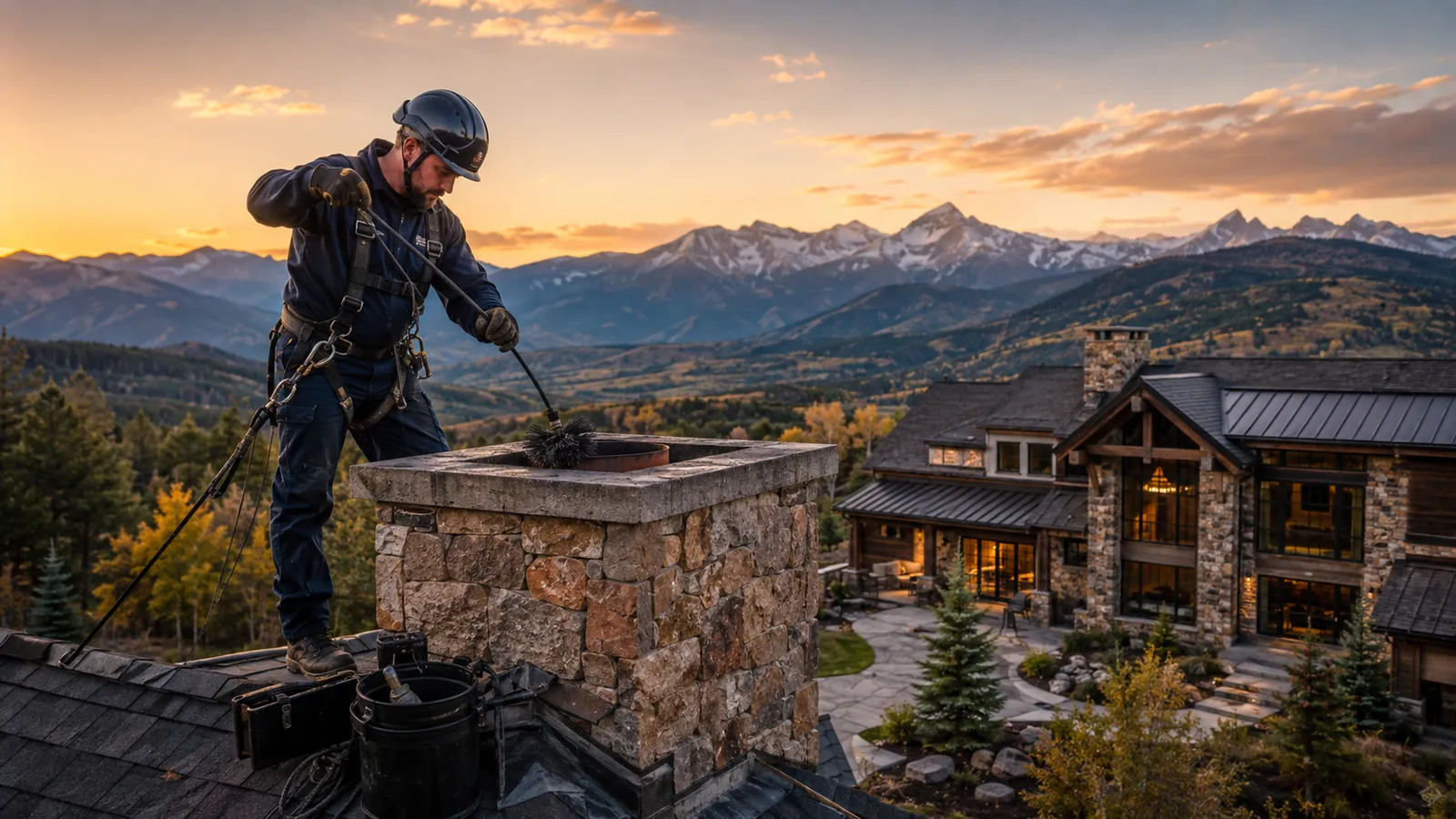
A useful inspection looks at the cap, crown, visible flue termination, masonry surfaces, flashing, chase cover if present, roof condition around the chimney and interior signs of water.
Photos are valuable because roof-level defects are difficult for homeowners to see from the ground.
Why delaying matters in Colorado
Once water gets into masonry or framing, repeated wetting can increase damage. In cold weather, freeze-thaw exposure can make moisture-related masonry problems worse.
Early diagnosis may turn a recurring mystery leak into a focused repair instead of a larger restoration project later.
Bottom line
Water coming into a fireplace can come from multiple locations. Do not accept a one-size-fits-all repair without identifying the entry path.
Saturn Chimney & Fireplace provides chimney leak diagnosis and repair throughout Denver, Colorado Springs, Fort Collins and surrounding Colorado communities.
Related Saturn services
Good to know
Frequently asked questions
Yes. A missing or damaged cap can allow direct precipitation into the flue.
The location and timing of staining can provide clues, but roof-level inspection is often needed to distinguish the sources.
No. It does not replace cap, crown, flashing or masonry repairs.
Snowmelt can reveal flashing, crown or masonry entry points that were not obvious during the snowfall itself.