Draft & Smoke
Exterior vs. Interior Chimneys: Why Some Fireplaces Draft Better Than Others
Learn why interior chimneys often stay warmer and how chimney location can affect draft, startup, condensation, and Colorado fireplace performance.
Two fireplaces with similar dimensions can behave very differently simply because one chimney runs through the center of the house and the other is attached to an outside wall.
Location changes temperature, and temperature changes draft.
Interior chimneys stay warmer
A chimney that passes through conditioned or semi-conditioned interior space receives heat from the building around it.
That can help the flue remain warmer before and during use, making it easier to establish upward draft.
Exterior chimneys cool faster
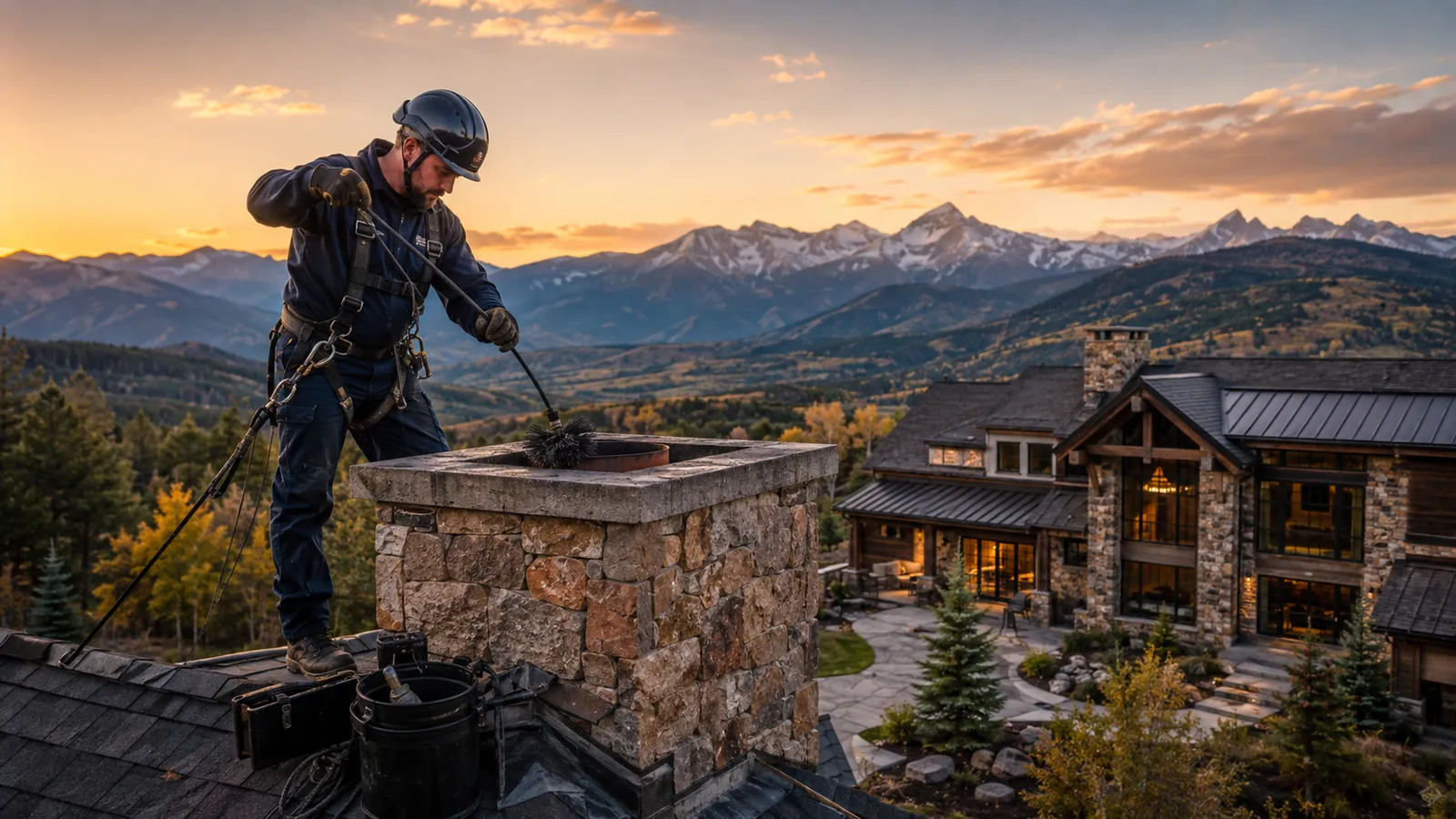
A masonry chimney built on an outside wall is exposed to cold outdoor air on multiple sides.
During a Colorado winter night, the air column inside can become very cold. When the fireplace is first lit, the fire has to overcome that cold downward-moving air before stable upward draft develops.
This can create a familiar startup problem: smoke enters the room for the first few minutes, then the fireplace works normally after the flue warms.
Cooler flues can increase condensation
When combustion gases cool more rapidly, water vapor and combustion byproducts can condense sooner.
In wood-burning systems, cooler conditions can contribute to creosote formation. In some gas systems, condensation can affect venting materials and masonry.
Does this mean exterior chimneys are bad?
No.
Many exterior chimneys work very well when correctly designed, sized, lined, and operated.
It simply means temperature may be a stronger variable.
Ways a professional may address poor performance
Depending on the cause:
- - Correct flue sizing
- - Appropriate liner installation
- - Insulated liner system
- - Improved air supply
- - Termination or cap correction
- - Chimney-height adjustment
- - Repair of blockage or damage
The right fix depends on the diagnosis.
House pressure still matters
Even a warm interior chimney can backdraft in a strongly depressurized home.
Do not attribute every draft problem to chimney location alone.
Colorado-specific pattern
The combination of exterior masonry, cold overnight temperatures, high elevation, and strong wind can make startup draft especially sensitive in Front Range homes.
If the problem is seasonal, tell the technician whether it happens only below a certain outdoor temperature or mainly during specific wind conditions.
Bottom line
Interior chimneys often benefit from warmer surroundings, while exterior chimneys can be more vulnerable to cold-start draft problems. Location is an important diagnostic clue, but good performance still depends on the complete fireplace and venting system.
Related Saturn services
Good to know
Frequently asked questions
A cold flue can contain dense air moving downward until the fire warms the chimney enough to establish upward draft.
In some systems, liner insulation helps maintain flue temperature and performance. It must be selected and installed appropriately.
Some fireplace users use manufacturer-approved startup techniques to establish draft. If smoke problems are frequent, have the underlying system evaluated instead of relying only on workarounds.
It can. House pressure, blockage, sizing, and appliance issues can affect any chimney. ---