
Inspections
How Often Should a Chimney Be Inspected in Colorado?
Understand annual chimney inspection guidance, inspection levels, and when Colorado homeowners need a closer look after storms, fires, changes or a home purchase.
A chimney can look normal from the living room and still have problems where a homeowner cannot see them. That is why regular inspection matters even when the fireplace seems to work normally.
For most homeowners, the practical baseline is simple: have the chimney, fireplace and venting system inspected at least once a year, and schedule additional evaluation when something significant changes.
Why annually?
CSIA's homeowner guidance references NFPA 211, which calls for annual inspection of chimneys, fireplaces and vents for soundness, deposits and correct clearances. Cleaning, maintenance and repairs are then performed when needed.
Annual does not mean the technician must find something wrong every year. The value is in confirming that the system has not developed a new problem since the last check.
In Colorado, a lot can happen between heating seasons: hail, strong wind, snow, freeze-thaw cycles, roofing work, animal activity and moisture intrusion.
The three inspection levels in plain English
Chimney inspection standards use different levels depending on the situation.
Level 1
This is the routine inspection for a system that has not changed and is being used in the same way as before. Readily accessible portions of the chimney, fireplace and connection are evaluated.
Level 2
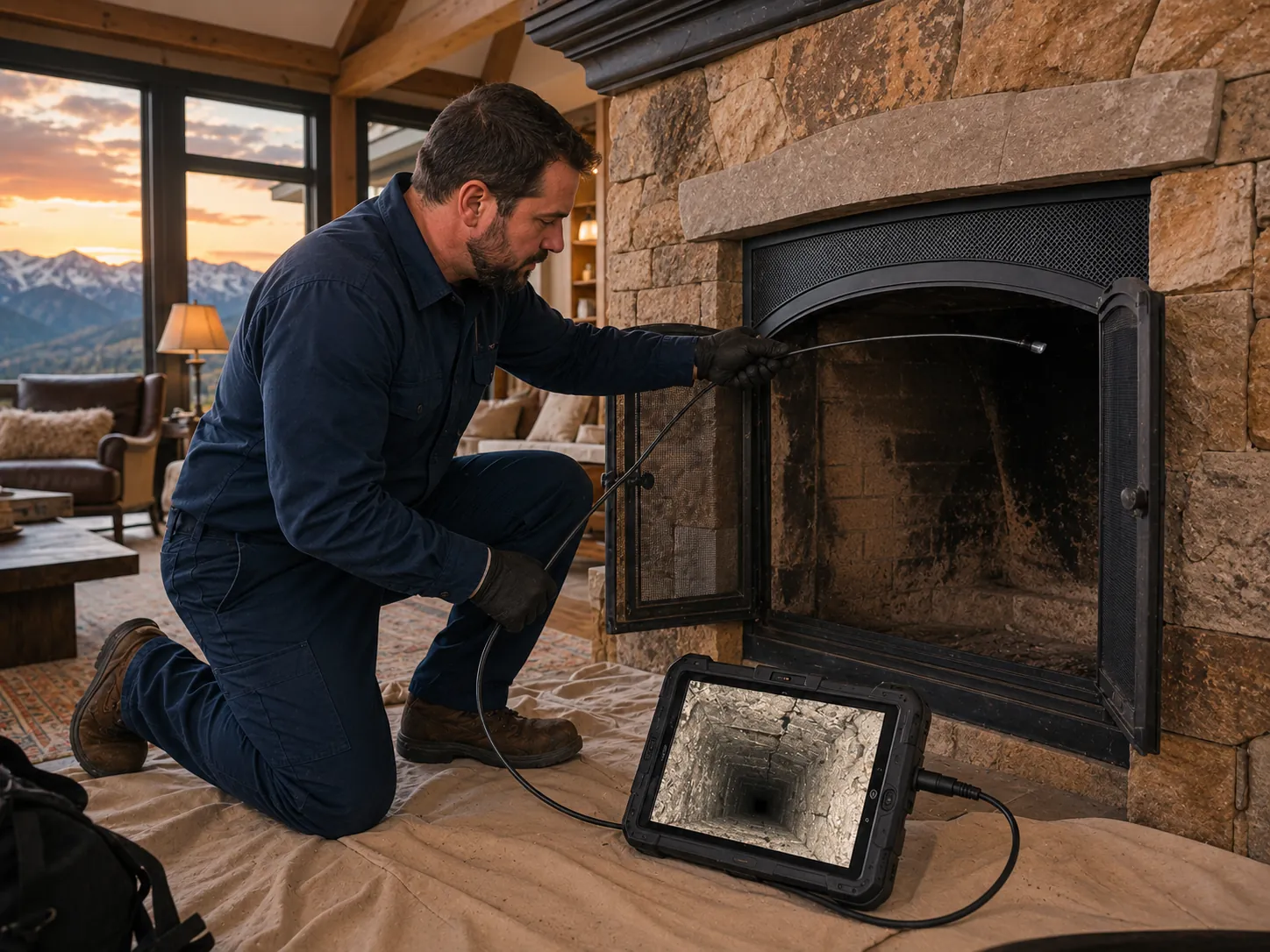
A Level 2 inspection is more detailed and includes inspection of additional accessible areas plus internal flue scanning. It is commonly appropriate after a change to the system, a property transfer, a chimney fire or an external event that may have caused damage.
For Colorado homeowners, “external event” can be especially relevant after major hail, a tree strike, structural movement, significant roof work or another event that could have affected the chimney.
Level 3
Level 3 is not routine. It is used when a potential hidden hazard cannot be fully evaluated without access to concealed areas. That can involve removing certain building or chimney components to see what is happening behind them.
When should you schedule an inspection sooner than one year?
Do not wait for your annual appointment if you notice smoke entering the room, strong new odors, pieces of tile or masonry in the firebox, water stains, a damaged cap, visible cracking, unusual soot from a gas fireplace or a sudden change in draft.
The same applies after a suspected chimney fire. Even a chimney that still appears to vent can have heat-related liner damage.
Buying a Colorado home with a fireplace
A general home inspection is valuable, but the interior of the chimney flue may be outside the normal scope of what the home inspector evaluates in detail.
If the fireplace is important to you, a dedicated chimney inspection can answer questions a simple visual check cannot: what condition is the flue liner in, is there evidence of previous damage, are there deposits or obstructions, and does the visible system appear appropriate for continued use?
This is particularly useful with older Denver homes, mountain-adjacent properties, homes that have undergone fireplace conversions, or properties where the previous owner cannot provide service history.
Why documentation matters
When an inspection leads to an expensive repair recommendation, ask to see what the technician found.
Good documentation can include photos, video from the flue and a written description of the defect. A cracked tile, open joint, damaged crown or failed cap should be explained in a way that makes sense to the homeowner.
If the recommendation is a major liner replacement or rebuild and the evidence is unclear, a second opinion can be reasonable.
What should an inspection not feel like?
It should not feel like a sales presentation where every chimney automatically needs the same repair.
Different defects require different solutions. A chimney cap problem is not a liner problem. Failed flashing is not automatically a masonry rebuild. Heavy creosote does not automatically mean the chimney structure has failed.
The inspection should separate safety findings, maintenance recommendations and optional improvements.
Colorado timing
If your fireplace is used regularly, schedule the annual inspection before the heavy winter season. Late summer and early fall are popular times, but spring can also be excellent because any repairs found can be completed before the next heating season.
For Denver-area wood burners, also remember that winter Action Days can trigger residential burning restrictions in portions of the Denver-Boulder metro, so a safe chimney does not override a temporary air-quality restriction.
Bottom line
Annual chimney inspection is a sensible safety baseline. Additional inspection may be warranted after a property transfer, system change, storm damage, chimney fire, malfunction or other significant event.
Saturn Chimney & Fireplace provides chimney inspection services throughout Denver, Colorado Springs, Fort Collins and surrounding Colorado communities.
Related Saturn services
Good to know
Frequently asked questions
Annual guidance accounts for more than creosote. Animals, moisture, weather and deterioration can affect an unused chimney too.
Common triggers include property transfer, system changes, a chimney fire, malfunction or an outside event that may have caused damage.
No. The inspection level describes how thoroughly the system should be examined, not the result.
If the repair is expensive or the evidence is unclear, asking for documentation and another qualified opinion can be reasonable.

