Inspections
The Complete Colorado Homeowner’s Guide to Chimney & Fireplace Care
A practical Colorado guide to chimney cleaning, inspections, repairs, draft problems, moisture, hail, caps, creosote and fireplace safety.
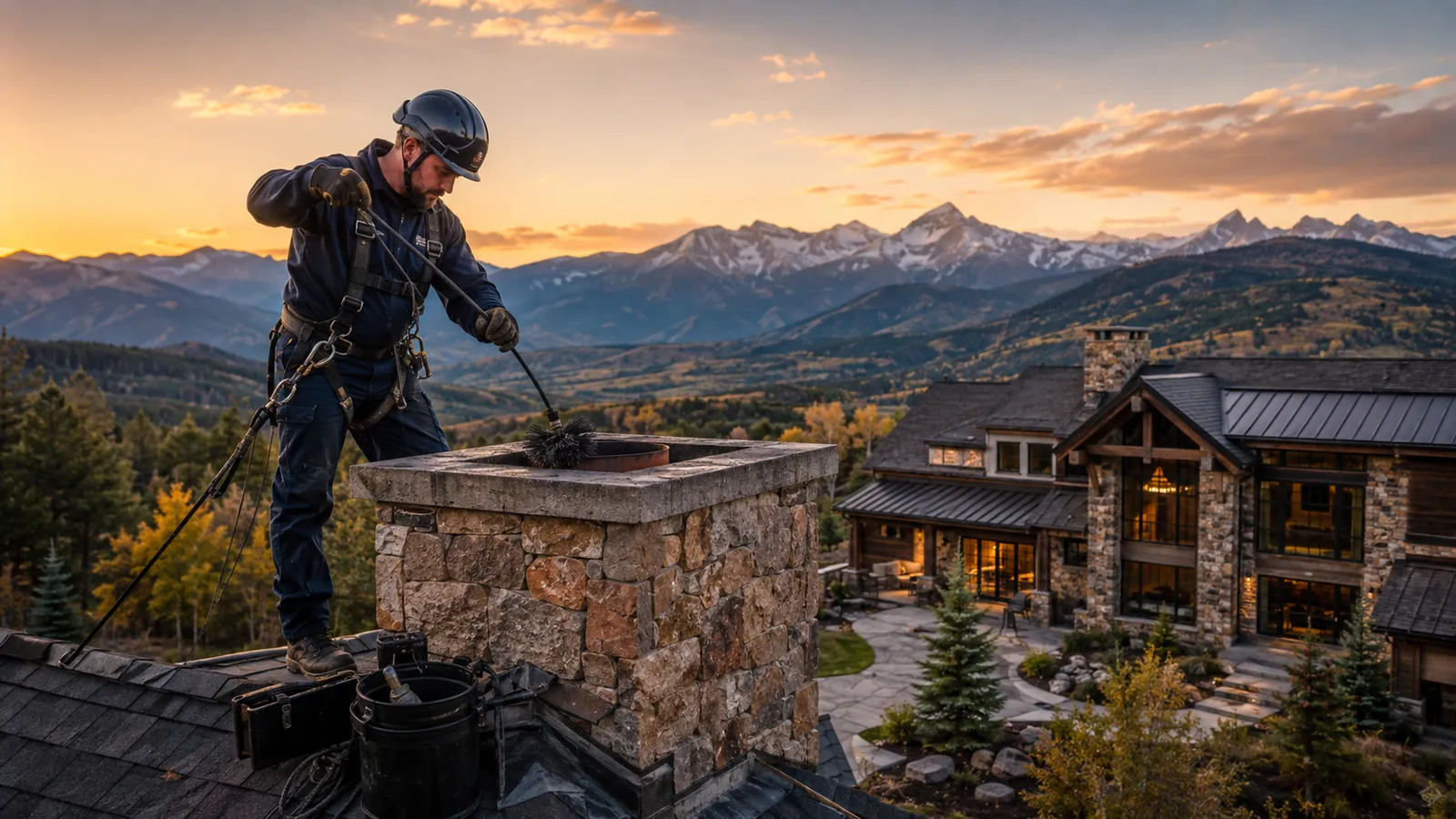
A fireplace fits naturally into Colorado living. It can be the center of a winter evening, a source of supplemental heat, and one of the most memorable features in a home. But the chimney above it works in an environment that can be demanding: cold nights, snow, wind, hail, rapid weather changes, dry air, high elevation, and months of seasonal use.
That combination is why chimney care in Colorado deserves more than a quick look at the firebox once a year. A chimney is a complete venting system. Its condition depends on the flue, masonry, cap, crown, flashing, damper, smoke chamber, appliance connection, and the way the house itself interacts with airflow.
This guide explains the questions Colorado homeowners ask most often and the warning signs that deserve attention before the first fire of the season.
Inspection and cleaning are not the same service
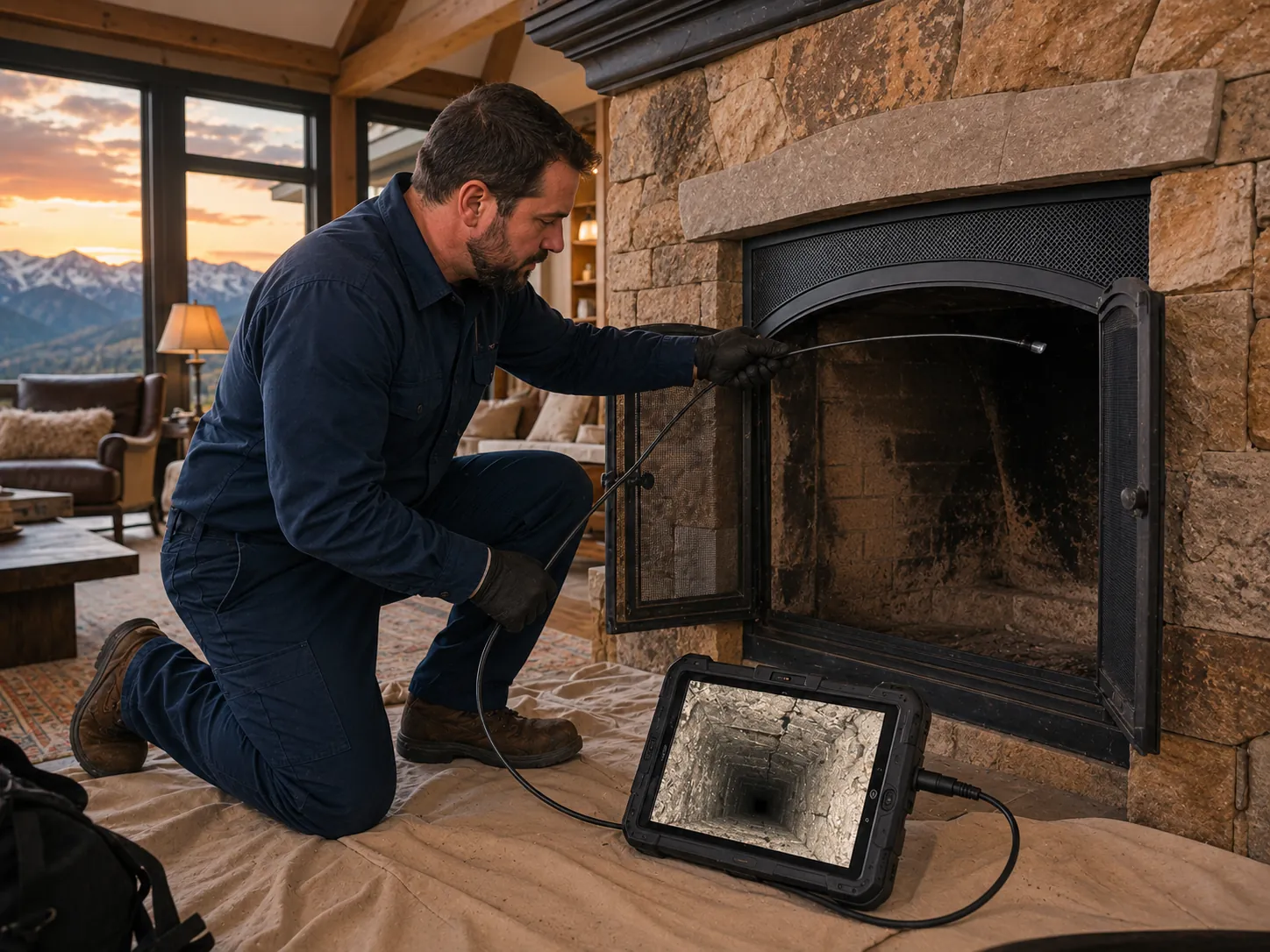
A chimney inspection evaluates the condition and operation of the system. A cleaning removes soot, creosote and other deposits when cleaning is needed. A chimney can be relatively clean and still have a damaged cap, cracked crown, deteriorated liner, loose masonry or an obstruction. It can also look fine from the fireplace opening while deposits are present higher in the flue.
National fire-safety guidance calls for chimney, fireplace and vent systems to be inspected at least annually, with cleaning and repairs performed when necessary. That is a useful baseline for Colorado homes even when the fireplace is used only occasionally, because deterioration, weather exposure and animal activity can occur during periods when the fireplace is not being used.
Colorado weather puts special pressure on exterior chimney components
The portion of a chimney above the roofline receives direct exposure to sun, rain, snow, wind and hail. Water intrusion is especially important because masonry is porous. Once moisture gets into cracks or deteriorated joints, repeated freezing and thawing can enlarge damage over time.
That does not mean every crack requires a rebuild. A small crown crack, failed flashing, deteriorated mortar joint and structurally compromised chimney are very different problems. The correct repair should match the actual defect.
After a major hailstorm, homeowners often focus on shingles and gutters. Chimney caps and vent terminations should not be forgotten. Large hail can deform or dislodge certain vent caps, so a post-storm roof inspection is a good time to include the chimney and other combustion vents.
High elevation can change how a fireplace behaves
A natural-draft chimney depends on temperature difference, chimney height, flue size, appliance design and pressure conditions in the house. Elevation can add another variable because air density changes as altitude increases.
A fireplace that drafts poorly is not automatically “too short,” and adding a cap or extending the chimney is not automatically the correct solution. Wind exposure, nearby rooflines, trees, flue sizing, a cold exterior chimney and negative pressure inside the home can all contribute to smoke spillage.
If a fireplace works well on calm days but smokes on windy days, that pattern is useful diagnostic information. If it smokes when kitchen or bathroom exhaust fans are running, house pressure may be part of the problem.
Creosote should be taken seriously
Creosote is a combustible byproduct of wood burning. The amount and type of buildup can vary based on wood moisture, fire temperature, appliance operation and chimney conditions.
Wet or unseasoned firewood tends to create more smoke and can contribute to greater deposit formation. A slow, smoldering fire can do the same. EPA Burn Wise guidance recommends dry, seasoned wood and cleaner burning practices; a moisture content around 20 percent or less is a commonly used target for firewood.
A homeowner does not need to become an expert in creosote stages. The important point is that glazed or heavy deposits should be evaluated and removed by an appropriate professional method rather than ignored or treated only with a chemical product.
Water may be a bigger long-term enemy than fire
Fireplace owners naturally think about fire safety, but many expensive chimney repairs begin with moisture.
Common entry points include a missing or damaged cap, cracked crown, deteriorated mortar, failed flashing and damaged chase covers. Inside the home, water intrusion may show up as ceiling stains near the chimney, damp smells, rust, white deposits on masonry or visible dripping into the firebox.
The source matters. Waterproofing a chimney will not repair failed flashing. New flashing will not correct an open crown crack. A cap will not fix deteriorated mortar. Good diagnosis comes before a repair recommendation.
Animals and debris can create problems even in unused chimneys
Colorado Parks and Wildlife recommends screening fireplace chimneys and other openings to reduce wildlife entry. Birds, squirrels, bats and other animals can enter unscreened openings or damaged caps.
If you hear scratching, fluttering or chirping inside the chimney, do not light a fire to force the animal out. Identify the situation first. Nests and debris can restrict venting, and wildlife removal may be subject to seasonal or species-specific considerations.
Gas fireplaces still need attention
Gas burns differently from wood, but “clean burning” does not mean “maintenance free.” Gas fireplace concerns can include ignition issues, burner problems, vent obstruction, incorrect log placement, soot, damaged glass seals and venting problems.
If a gas fireplace begins producing unusual soot, odors, delayed ignition or repeated shutdowns, it deserves inspection rather than repeated attempts to restart it.
A simple Colorado chimney checklist
Before regular winter use, look for obvious exterior damage from the ground, confirm the cap is present, check for water staining around the fireplace, make sure the damper operates correctly, and schedule a professional inspection when due.
After a hailstorm or roofing project, include the chimney and roof-level vent components in the post-work check.
If you are buying a home with a fireplace, do not assume a standard home inspection tells you everything about the flue interior. A more detailed chimney inspection may be appropriate, especially when the system's history is unknown.
And if a company recommends an expensive liner, rebuild or major repair, ask to see the condition being cited. Photos, video and a clear explanation should make the recommendation easier to understand.
The goal is not to sell the biggest repair
Good chimney service starts with a simple question: what does this system actually need?
Sometimes the answer is cleaning. Sometimes it is a cap, flashing repair, crown work, liner repair, masonry work or a fireplace service issue. And sometimes an inspection shows that no major repair is necessary.
For Colorado homeowners, the best approach is consistent maintenance, attention to weather-related damage and a technician who can explain the system in plain language.
Need chimney or fireplace service in Colorado?
Saturn Chimney & Fireplace provides chimney cleaning, inspections, repairs, installations and fireplace services throughout Denver, Colorado Springs, Fort Collins and surrounding communities.
Our approach is built around safety, professional workmanship, clear explanations and fair pricing.
Related Saturn services
Good to know
Frequently asked questions
At least annually is a widely used safety baseline. Cleaning and repairs are then performed when the inspection shows they are needed.
Not every chimney accumulates deposits at the same rate. Inspection should determine whether cleaning is needed based on buildup, obstruction and system condition.
After significant hail, it is sensible to include chimney caps and roof-level vent components in the post-storm inspection, especially if the roof was damaged.
Yes. Elevation can be one factor, but chimney height, temperature, flue sizing, wind and house pressure also influence draft.