Inspections
Birds, Squirrels, and Other Animals in Colorado Chimneys: What Homeowners Should Know
Birds, squirrels, bats, and other wildlife can enter uncapped chimneys. Learn what to do, what not to do, and how chimney caps help prevent entry.
A strange scratching noise inside a chimney can turn a quiet morning into a mystery. In Colorado, birds, squirrels, bats, and other wildlife may investigate openings that look like shelter.
A chimney is especially attractive when the cap or screening is missing or damaged.
How animals get in
Common entry points include:
- - Open masonry flues
- - Missing chimney caps
- - Damaged screens
- - Rusted factory-built terminations
- - Open chase cavities
- - Gaps around deteriorated components
Colorado Parks and Wildlife recommends screening fireplace chimneys and other openings as part of preventing wildlife from entering homes.
Do not light a fire to force an animal out
This can injure or kill the animal, create smoke and odor problems, and ignite nesting material.
Some species are also protected by state or federal law, and nest removal may be restricted during active nesting periods.
Identify the animal and situation before acting.
Birds in chimneys
Birds may nest on smoke shelves, ledges, or inside open flues. Chirping babies can make the problem obvious, but nests may remain after the birds leave.
Nest material can obstruct venting and should be removed appropriately before the fireplace is used.
Squirrels and small mammals
Squirrels can fall into smooth flues and be unable to climb back out. Others intentionally enter openings in search of shelter.
If an animal is trapped, a wildlife professional may be needed to remove it without injury.
What about bats?
Bats require special care because of wildlife rules and potential health concerns. Do not handle a bat with bare hands.
If a bat enters the living space, follow Colorado public-health and wildlife guidance for safe response.
After the animal is gone
The job is not finished until the chimney is checked.
Look for:
- - Nest material
- - Debris
- - Damaged screens
- - Odor or contamination
- - Blockage
- - Cap damage
A cleaning may be needed depending on the material present.
Preventing repeat entry
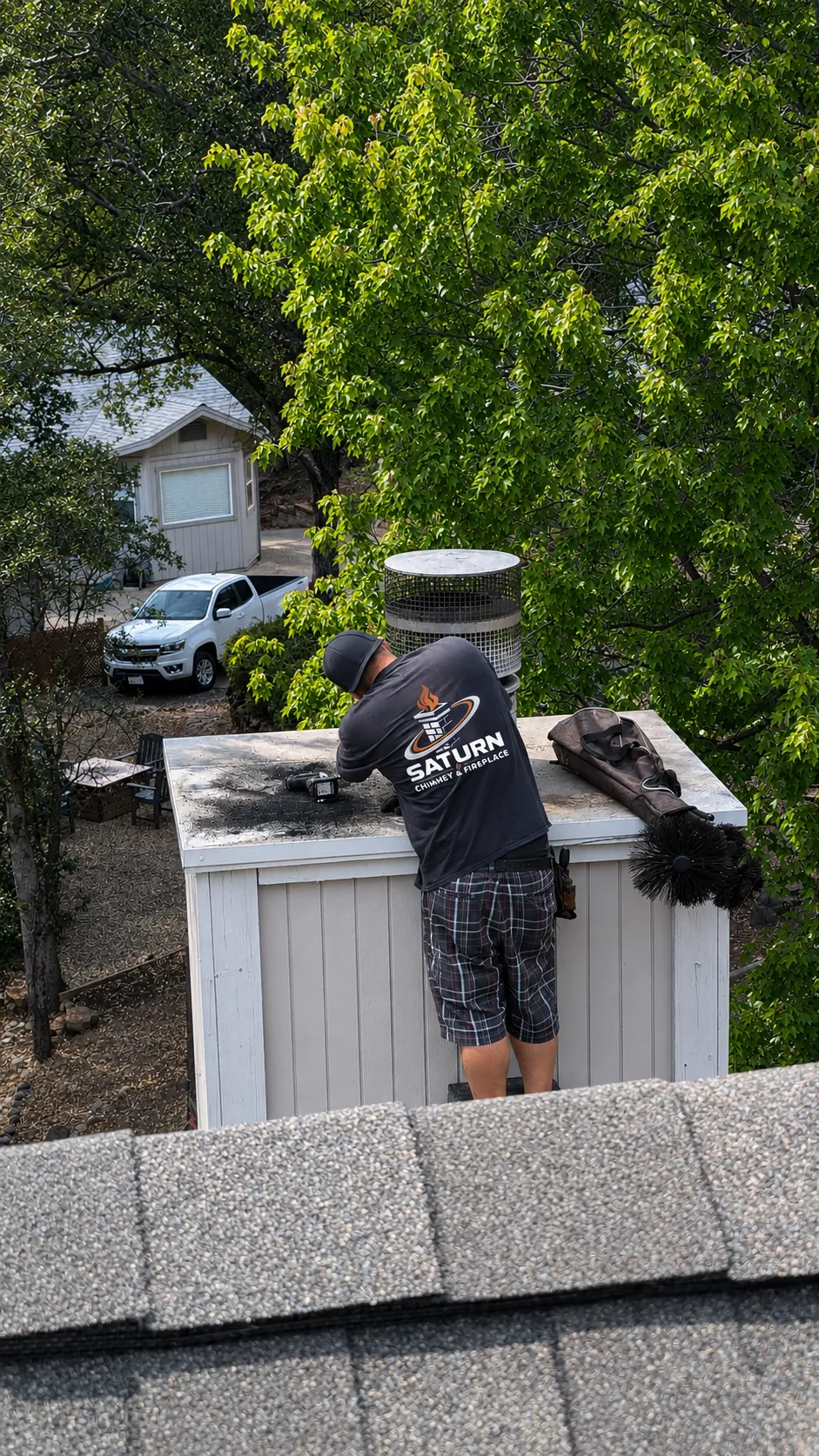
A properly selected chimney cap with appropriate screening can reduce animal entry while still allowing the chimney to vent.
The cap must fit the system. Wood-burning masonry chimneys, gas vents, and factory-built fireplaces do not all use the same termination.
Colorado storm damage can reopen the door
Hail, wind, and heavy snow can damage or dislodge caps and screens. If wildlife suddenly appears in a chimney that was previously protected, inspect the termination for storm damage.
Bottom line
If you hear or see wildlife in a chimney, do not use fire as a removal method. Identify the animal, follow applicable wildlife guidance, clear any obstruction after removal, and repair the entry point so the problem does not repeat.
Related Saturn services
Good to know
Frequently asked questions
Rules can depend on species and whether the nest is active. Identify the situation first and follow wildlife regulations.
A properly fitted and maintained cap greatly reduces entry, but damaged screens or other openings can still create access.
Nesting material can obstruct venting and may be combustible, so the chimney should not be used until the obstruction is removed.
A wildlife-control professional may be appropriate for removal; a chimney professional can inspect and service the venting system afterward.