Wildlife
Can I Light a Fire If There Is a Bird Nest in My Chimney?
Do not use a fireplace with a known or suspected bird nest in the chimney. Learn about blockage, fire risk, wildlife rules, and safe removal.
If you know there is a bird nest in your chimney, do not light a fire to “smoke it out.”
A nest can obstruct the flue, contain combustible material, and hold eggs or live birds. Depending on the species and season, wildlife protections may also apply.
Why a nest can be dangerous
A chimney needs a clear pathway for smoke and combustion gases.
Twigs, grass, leaves, feathers, and nesting material can reduce that opening. Even a partial blockage can interfere with draft and send smoke back into the home.
Dry nest material can also ignite.
What if the birds already left?
An abandoned nest can still be a blockage.
Before using the fireplace, have the material removed and the chimney checked for remaining debris. A nest can extend farther into the flue than it appears from either end.
What if there are eggs or babies?
Do not disturb an active nest until the species and legal requirements are understood.
Many native birds are protected under federal law. Removal timing and methods may depend on whether the nest is active.
A wildlife professional can help identify the situation.
Can I put a cap on immediately?
Do not cap a chimney while animals are still inside.
The correct sequence is:
1. Identify the species and activity. 2. Remove or allow departure according to applicable rules. 3. Remove nest and debris. 4. Inspect the flue. 5. Install the appropriate cap or repair screening.
How birds get in
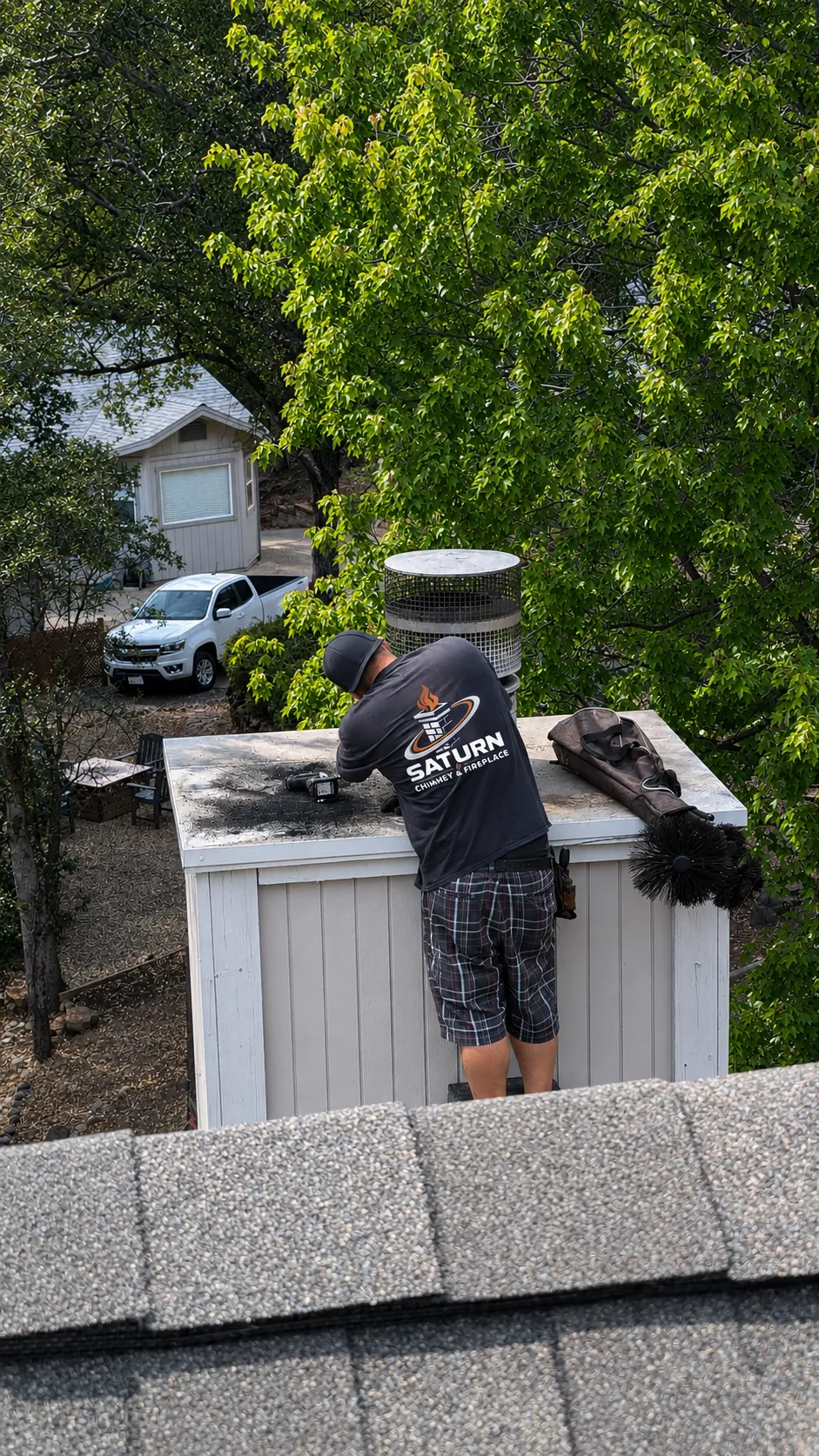
Open masonry flues and damaged cap screens are common entry points. Some birds also nest around factory-built terminations or chimney chases.
The replacement cap has to match the venting system. A generic screen should not be placed over a gas or factory-built vent without confirming it is approved for that system.
Bottom line
A bird nest means the chimney should stay out of service until the wildlife issue is resolved and the flue is clear. Fire is not a removal tool.
Related Saturn services
Good to know
Frequently asked questions
It can injure birds, create a fire hazard, and may violate wildlife protections. Do not use this method.
Any obstruction can interfere with venting and may contribute to combustion gases entering the home.
It depends on whether the nest is active and the species involved. Follow applicable wildlife guidance.
After the flue is confirmed clear, install or repair a properly fitted chimney cap or approved termination screen.