
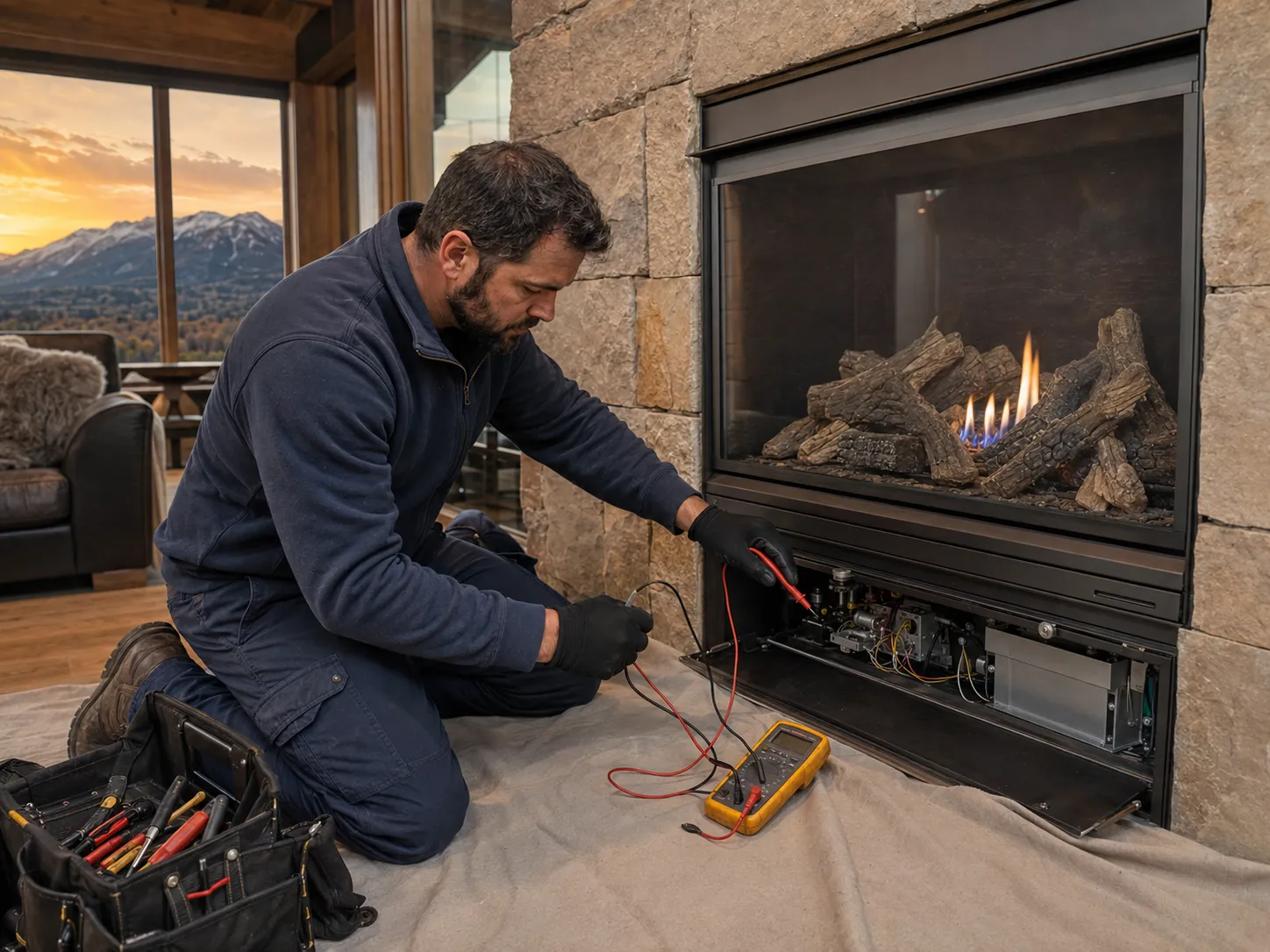
Gas Fireplaces
Gas Fireplace Not Turning On? Common Causes to Check
A gas fireplace may fail to start because of the pilot, ignition system, gas supply, controls, batteries, or safety sensors. Learn what to check safely.
A gas fireplace that will not turn on can have a simple cause, such as dead remote batteries, or a problem that requires professional service, such as ignition failure or gas-supply trouble.
Because gas is involved, troubleshooting should stay within safe homeowner checks. Do not bypass safety controls or disassemble gas components unless you are qualified to do so.
Start with the obvious controls
Check:
- - Wall switch position
- - Remote control batteries
- - Receiver battery pack, if equipped
- - Thermostat setting
- - Circuit breaker or power supply for electronic ignition systems
- - Fireplace control mode
Many service calls begin with a control that was switched to the wrong mode during cleaning or battery replacement.
Is the pilot light on?
Some fireplaces use a standing pilot; others use electronic ignition.
If your system has a pilot and it is out, follow the manufacturer's relighting instructions exactly. If the pilot will not stay lit, repeated attempts are unlikely to solve the underlying issue.
Gas supply problems
A closed shutoff valve, interrupted utility service, empty propane tank, or pressure problem can prevent ignition.
If other gas appliances are also not working, the issue may not be limited to the fireplace.
If you smell gas, leave the area and follow your gas utility's emergency instructions. Do not operate switches or attempt repeated ignition.
Dirty or misaligned components
Dust, pet hair, corrosion, or improper log placement can affect sensors and burner operation in some systems.
Gas-log positioning matters because many fireplaces are designed and tested with a specific arrangement. Moving logs “to make the flame look better” can interfere with combustion.
Ignition and safety components
Depending on the model, the system may use:
- - Thermocouple or thermopile
- - Flame sensor
- - Electronic ignition module
- - Pressure switch
- - Limit switch
- - Safety shutoff
When these components fail or detect an unsafe condition, the fireplace may refuse to start.
Venting can affect operation
Direct-vent and other gas fireplaces rely on clear vent terminations. Snow, debris, nests, or damaged components can interfere with airflow.
Do not modify the vent cap or screen. It is part of a listed system.
When to call for service
Schedule service when:
- - Pilot will not stay lit
- - Ignition clicks but no flame appears
- - Burner starts and immediately shuts off
- - Soot develops
- - You smell unusual combustion odors
- - Controls are unresponsive after basic checks
- - Vent termination is damaged
Bottom line
A gas fireplace that will not turn on may have a simple control problem or a safety-related fault. Check batteries, switches, and basic settings, then stop if the issue involves gas, ignition components, or repeated shutdowns.
Related Saturn services
Good to know
Frequently asked questions
Possible causes include gas supply, ignition, flame sensing, or control issues. Repeated clicking without ignition should be serviced.
Yes. Many remotes, receivers, and millivolt systems use batteries even when the fireplace appears permanently installed.
Only if the manufacturer provides a homeowner relighting procedure and there is no gas odor or other concern.
Batteries can discharge, dust can accumulate, pilots can go out, and insects or debris can affect components during long periods of inactivity.