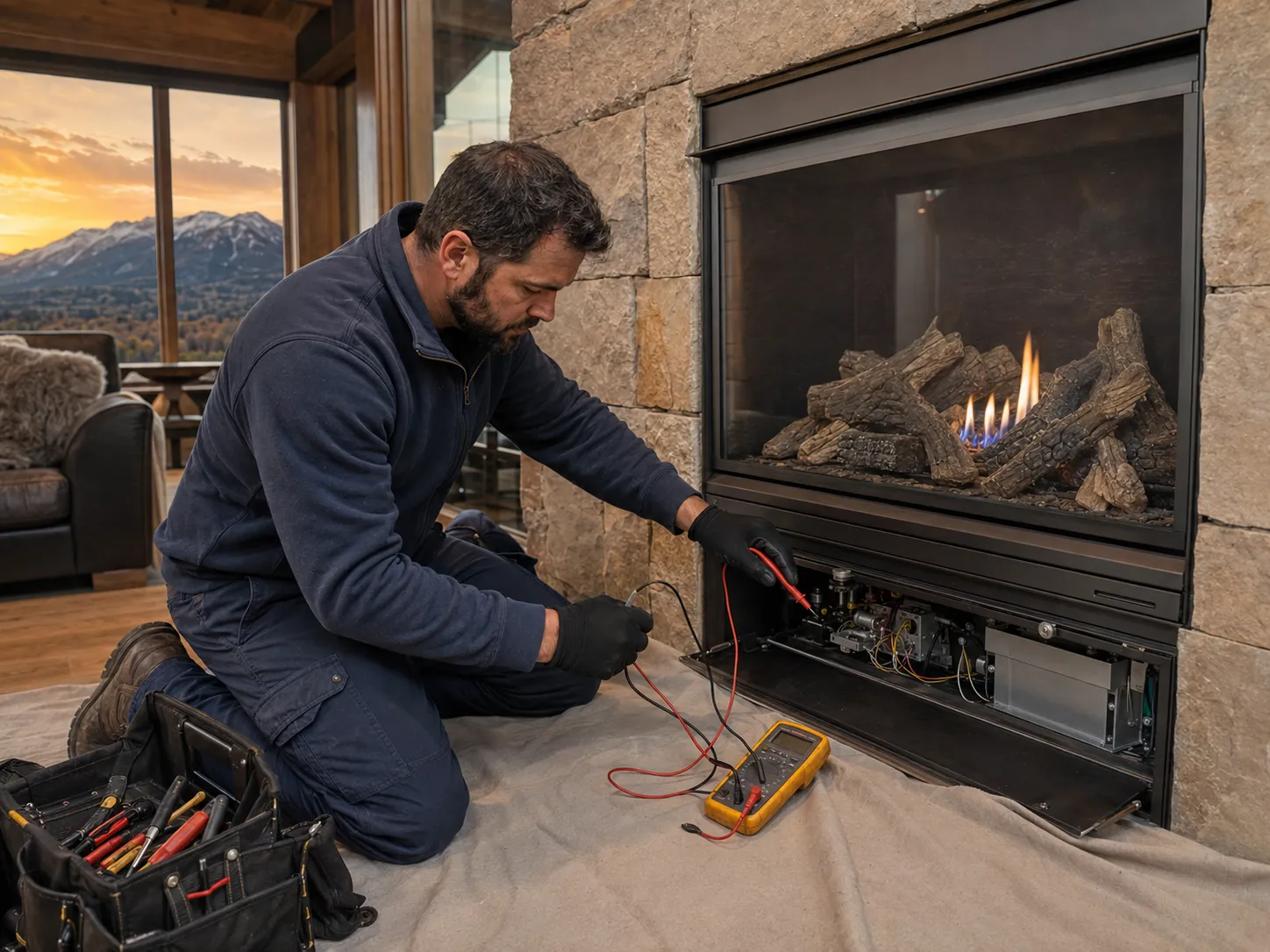
Gas Fireplaces
Does a Gas Fireplace Need Annual Maintenance?
Gas fireplaces do not create wood creosote, but burners, pilots, glass, logs, controls, seals, and venting still need periodic inspection and maintenance.
Gas fireplaces are convenient partly because they avoid ash piles and wood storage. That convenience can create the impression that they never need service.
They do.
The exact maintenance schedule should follow the fireplace manufacturer's instructions, but periodic professional evaluation is a good way to identify wear, venting problems, and combustion issues before they become obvious.
What gets checked on a gas fireplace?
Depending on the model, service may include:
- - Burner and burner ports
- - Pilot or ignition system
- - Flame sensor
- - Thermocouple or thermopile
- - Log or media placement
- - Glass and gasket condition
- - Vent connections and termination
- - Fan or blower
- - Remote and receiver
- - Visible wiring
- - Safety controls
Why dust matters
Gas fireplaces pull room air or outside air through components, depending on design. Dust, pet hair, and household debris can collect on burners, fans, and controls.
A fireplace that has been unused all summer may need cleaning before heavy winter use.
Venting still matters
Gas does not produce wood-burning creosote, but the exhaust still needs a clear, properly installed vent path.
Birds, insects, snow, physical damage, or corrosion can affect terminations.
Never cover or modify a direct-vent termination with generic screening.
Look for changes in flame
A change in flame pattern can indicate a dirty burner, displaced log, pressure issue, or venting problem.
Watch for:
- - New soot
- - Flame lifting off the burner
- - Delayed ignition
- - Frequent shutdown
- - Pilot instability
- - Unusual odors
Glass and gaskets
The glass assembly is part of the appliance. Cracked glass, damaged gasket material, or improper reinstallation can affect safe operation.
Do not operate a fireplace with broken glass unless the manufacturer specifically allows a configuration without it.
Carbon monoxide alarms still matter
Any home with fuel-burning appliances should have functioning carbon-monoxide alarms according to applicable safety guidance.
A gas fireplace that looks clean can still have a venting or combustion problem.
Bottom line
Gas fireplaces need less soot management than wood-burning fireplaces, but they are not maintenance-free. Follow the manufacturer schedule and have the system serviced when operation changes or before regular seasonal use when due.
Related Saturn services
Good to know
Frequently asked questions
Gas systems do not produce wood creosote, but venting may still require inspection or cleaning if debris, corrosion, or other obstruction is present.
Follow the manufacturer's instructions. Many homeowners choose annual or pre-season service, especially for regularly used systems.
Some manufacturers allow limited homeowner cleaning, but avoid disturbing logs, pilot components, or burner settings unless instructed.
Dust can accumulate on surfaces during the off-season and produce a temporary odor as it warms. Persistent, gas-like, or unusual combustion odors require attention.
Keep reading