Wildlife
Something Is Scratching Inside My Chimney - What Should I Do?
Scratching, fluttering, or chirping in a chimney may mean wildlife is trapped or nesting. Learn safe next steps and when the flue should be inspected.
Scratching inside a chimney often means an animal is moving somewhere in the flue, smoke chamber, chase, or fireplace cavity.
The sound can be surprisingly loud because the chimney acts like an echo chamber.
First: do not start a fire
Lighting a fire can expose a trapped animal to smoke and heat and may ignite nesting material.
Keep the fireplace unused until you know what is inside and whether the vent path is clear.
Listen to the type of sound
The noise can provide clues:
Chirping
Often associated with birds or nestlings.
Rapid fluttering
May indicate a bird or bat.
Scratching and climbing
Could be a squirrel or another small mammal.
Movement mainly at night
May point toward nocturnal wildlife, although sound timing alone is not enough for identification.
Check the fireplace opening safely
With no fire present, look from the room for visible debris, feathers, nesting material, or an animal near the damper.
Do not reach blindly into the chimney or handle wildlife directly.
Should you open the damper?
Opening a damper can allow a trapped animal into the living space. If you do not have a safe containment plan, it may be better to wait for professional help.
Look at the cap from the ground
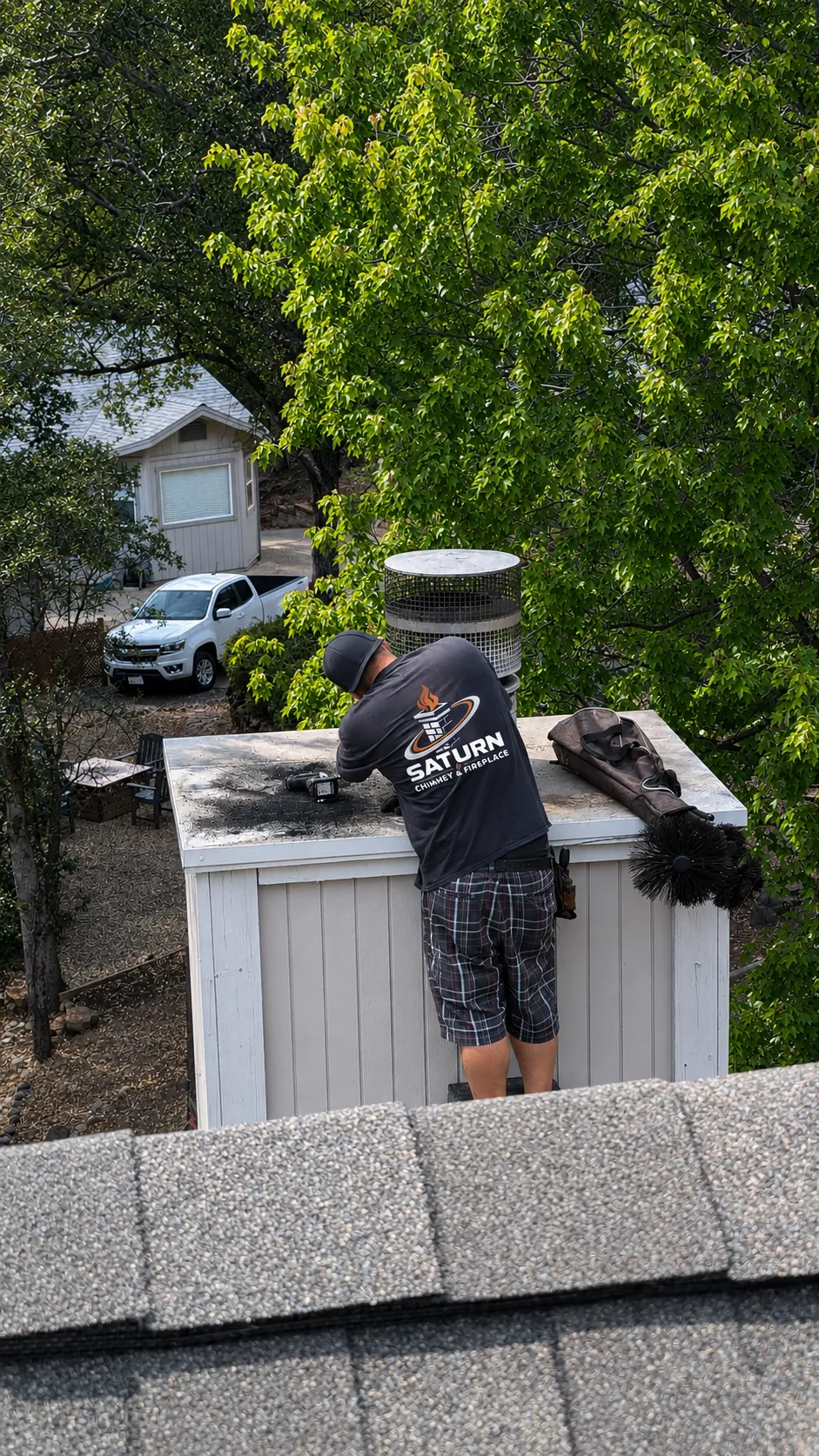
If visible, check whether the chimney has a cap and whether it appears tilted, missing, or damaged.
Do not climb onto the roof unless you are trained and equipped for safe access.
When wildlife removal is needed
A live-animal situation may require a wildlife professional, particularly for bats, raccoons, protected birds, or animals trapped in inaccessible spaces.
After removal, the chimney should be evaluated for nests, blockage, and cap damage.
Why the chimney may still need cleaning
Even after the animal is gone, nesting material or debris can remain. Droppings, feathers, leaves, and twigs may obstruct the flue or create odor.
The fireplace should not be used until the venting pathway is clear.
Preventing it next season
Install or repair the correct chimney cap and screening after the animal and nest situation is resolved.
Inspect the cap after major hail or wind events, because damaged screening can create a new entry point.
Bottom line
Scratching in a chimney is usually a reason to stop fireplace use, not a reason to light a fire. Identify and remove the animal safely, clear the venting pathway, and correct the opening that allowed entry.
Related Saturn services
Good to know
Frequently asked questions
Metal components can make ticking or popping noises with temperature changes, but persistent animal-like scratching or chirping should be investigated.
Yes, depending on the damper and fireplace design. Avoid opening the system without a plan if an animal may be trapped.
Do not seal an animal into the chimney. Confirm the flue is clear before installing a cap or closing an entry point.
The screen may be damaged, the cap may be loose, or the animal may be entering through another opening in the chase or structure.