
Chimney Liners
What Is a Chimney Liner and Why Does It Matter?
Learn what a chimney liner does, the main liner types, warning signs of damage, and why proper venting matters in Colorado homes.
A chimney may look like a simple masonry shaft from the outside, but the flue inside is what carries combustion gases out of the home. In many systems, that flue is protected or formed by a chimney liner.
The liner is one of the least visible parts of a chimney and one of the most important to understand. Homeowners often hear about liners only after an inspection, especially when a technician finds cracked clay tiles, gaps, corrosion, an oversized flue, or a venting problem connected to a fireplace or heating appliance.
What does a chimney liner actually do?
A liner creates a defined passage for smoke and combustion gases to travel from the appliance to the outdoors. Depending on the system, it can also help protect surrounding masonry and combustible building materials from heat and combustion byproducts.
The liner also affects draft. A flue that is too large, too small, damaged, blocked, or poorly matched to the appliance can create venting problems even when the exterior chimney looks fine.
That is why liner questions should be answered by looking at the complete system rather than simply asking whether a liner is present.
The most common liner types
Clay tile liners
Many traditional masonry chimneys contain stacked clay flue tiles. They can perform well for many years when properly installed and maintained, but they can crack, separate at joints, or deteriorate after heat events, moisture exposure, age, or previous repairs.
Because the tiles are inside the chimney, damage may not be visible from the firebox or from the roof.
Stainless steel liners
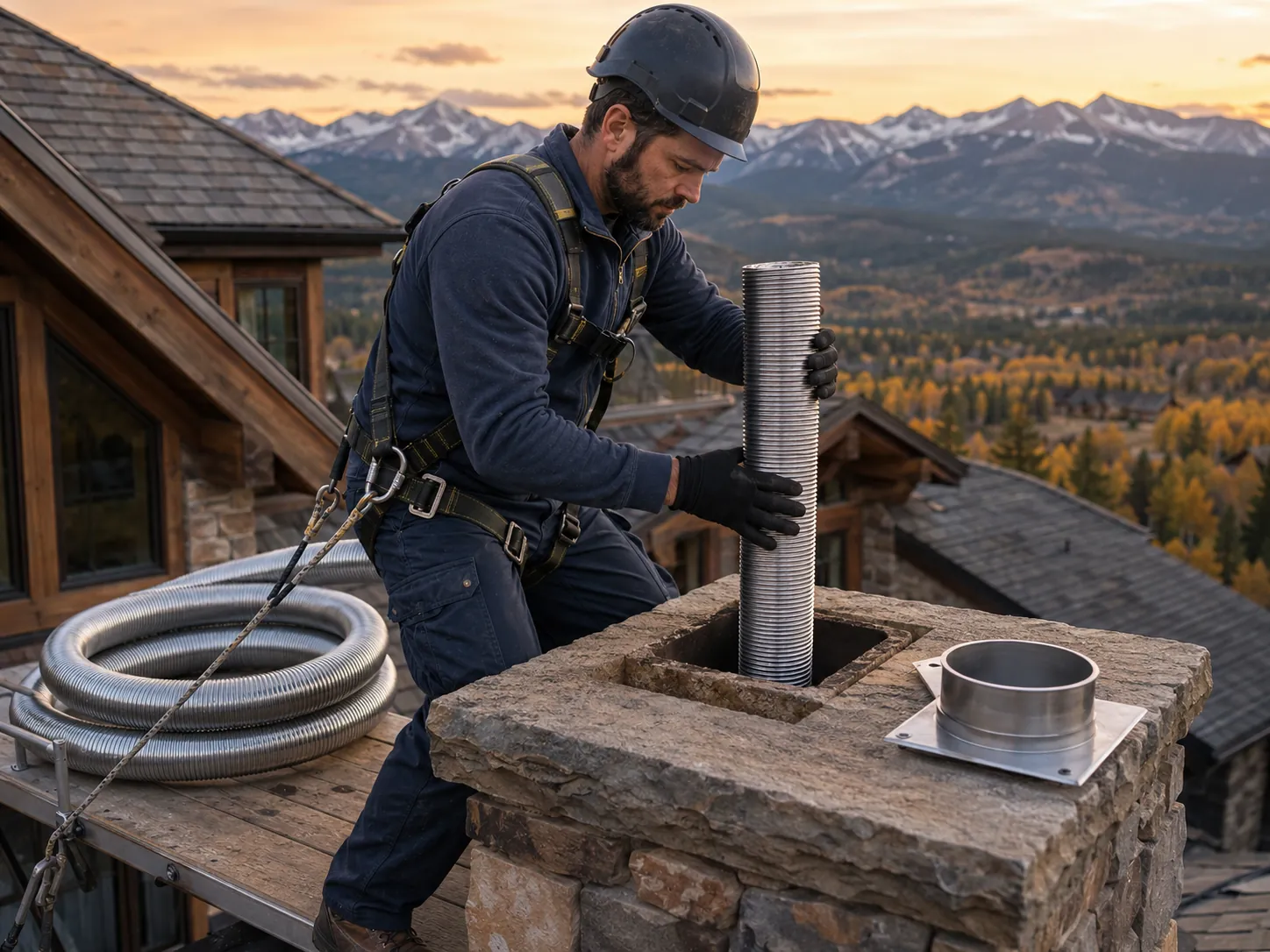
Stainless steel liners are often used when relining an existing chimney, changing appliances, or correcting certain venting conditions. The liner system has to be selected and installed for the fuel and appliance it serves.
A stainless liner is not automatically the answer to every chimney problem. The reason for the relining recommendation should be clear before work begins.
Cast-in-place and other systems
Some chimneys may use specialized poured or resurfacing systems. Suitability depends on the chimney, the defect, the appliance, and the installation requirements.
How do I know whether my liner is damaged?
Possible clues include:
- - Pieces of tile or mortar appearing in the firebox
- - Draft problems that were not present before
- - Smoke entering the room
- - Evidence of a previous chimney fire
- - Water intrusion and interior deterioration
- - A technician identifying cracks, gaps, missing sections, or corrosion during inspection
Not every liner defect produces an obvious symptom. Internal video inspection can be useful when the condition cannot be adequately evaluated from the ends of the flue.
Does every liner crack mean replacement?
No. The important questions are the location, extent, type of defect, and the system being vented.
A homeowner should be cautious of any recommendation that jumps directly from “we saw a crack” to “you need a complete new liner” without documenting the condition and explaining why the proposed repair is appropriate.
Sometimes relining is the correct solution. In other situations, a different repair may be possible. The recommendation should match the actual condition.
Why liner sizing matters
A flue is not simply an empty passage. Its dimensions affect how quickly exhaust gases warm the chimney and move upward.
A flue that is poorly matched to the connected appliance can contribute to condensation, sluggish draft, smoke spillage, or other performance issues. This becomes particularly relevant when an older fireplace or furnace has been replaced with a newer appliance but the original chimney remains.
Colorado considerations
Colorado homes can add several variables to chimney performance: high elevation, exterior chimneys exposed to cold weather, strong winds, and large temperature changes between day and night.
Those conditions do not automatically create a liner problem, but they can make correct venting design and system condition more important.
Water is another concern. A damaged cap, crown, or flashing can allow moisture into the chimney structure. Over time, repeated moisture exposure can contribute to deterioration of masonry and some liner systems.
What should you ask if a company recommends a new liner?
Ask to see the defect. If video was used, ask to see the images. Ask what type of liner is currently installed, what the new liner will serve, why the proposed liner material is appropriate, and whether there are alternatives.
A good explanation should make the recommendation easier to understand, not more confusing.
Bottom line
A chimney liner is a working part of the venting system, not simply an optional insert inside a brick chimney. Its condition, size, material, and connection to the appliance all matter.
If an inspection identifies a liner concern, focus first on understanding the defect. The goal should be to choose the repair that safely matches the actual system rather than automatically choosing the largest project.
Related Saturn services
Good to know
Frequently asked questions
Usually only a small portion is visible. A more complete evaluation may require access from above or internal video inspection.
A crack can be important because the liner is part of the venting pathway. The severity depends on the location, extent, appliance, and surrounding construction.
In many situations, yes, but the liner must be properly selected, sized, and installed for the appliance and fuel type.
If the reason for the recommendation is unclear or the project is substantial, getting documentation and another qualified opinion is reasonable.