Chimney Liners
Clay Tile vs. Stainless Steel Chimney Liners: What Colorado Homeowners Should Know
Compare clay tile and stainless steel chimney liners, including common uses, repair considerations, draft, moisture, and Colorado climate factors.
When a chimney inspection leads to a liner discussion, homeowners often hear two materials mentioned: clay tile and stainless steel. They are not interchangeable in every situation, and neither is universally “better” without knowing the chimney and the appliance it serves.
Understanding the basic differences can help you ask better questions before a repair or installation.
Clay tile liners
Clay flue tiles have been used in masonry chimneys for generations. The tiles are stacked vertically inside the chimney and joined with mortar.
Advantages
A sound clay liner can provide a durable flue for appropriate applications. It is a familiar component in many Colorado masonry chimneys and may remain serviceable for a long time when protected from damage and excessive moisture.
Common problems
Clay is rigid. It can crack under severe thermal stress, including a chimney fire. Joints can deteriorate, tiles can shift, and older installations may have gaps or damage that are difficult to see without a more detailed inspection.
Repair access can also be challenging because the liner is enclosed inside masonry.
Stainless steel liners
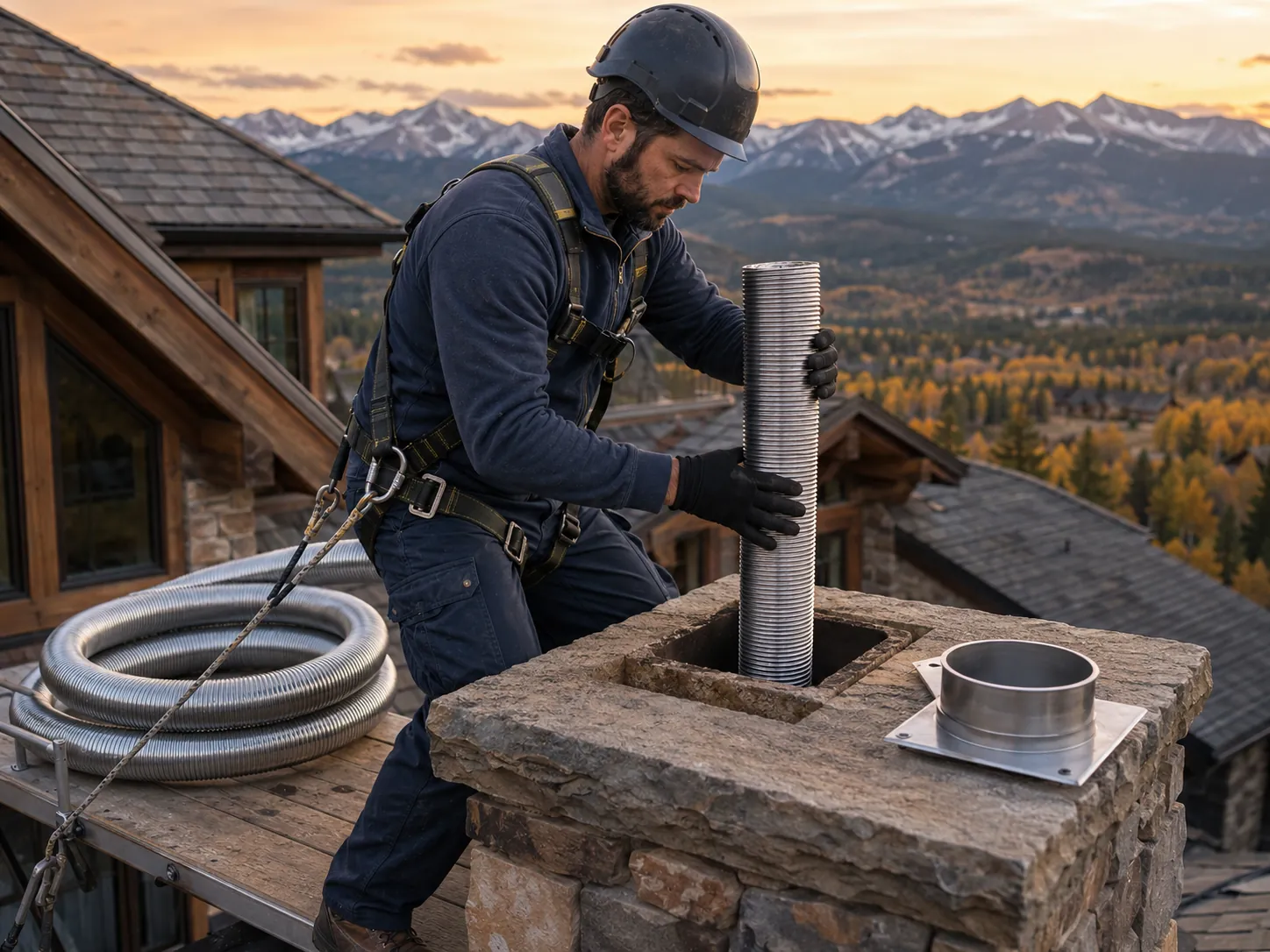
Stainless liners are metal flue systems installed inside an existing chimney or used as part of a specific venting configuration. Different grades and systems are intended for different fuels and applications.
Advantages
A stainless liner can provide a continuous venting passage and may be useful when an existing flue is damaged, improperly sized, or being adapted to a new appliance.
It can also allow an older masonry chimney to continue functioning as the surrounding structure while the new liner becomes the primary vent pathway.
Important limitations
“Stainless” does not mean “one size fits all.” The liner has to be compatible with the fuel, appliance, temperature, flue dimensions, and installation requirements. Insulation may be part of the system in some applications.
A liner installed incorrectly can still create problems.
Which one drafts better?
Draft depends on more than liner material.
Flue size, height, temperature, appliance output, chimney location, house pressure, and outdoor conditions all affect performance. A properly sized stainless liner can sometimes improve performance when an old masonry flue is too large for a connected appliance, but that is a system design issue rather than proof that stainless always drafts better.
Which handles Colorado weather better?
Most of the liner is inside the chimney, but Colorado weather can still affect it indirectly.
Water entering through a damaged cap, crown, flashing, or chase cover can expose interior chimney components to moisture. Repeated wetting, freezing, and thawing can damage surrounding masonry and create conditions that accelerate deterioration.
The correct strategy is not simply to choose a water-resistant liner. The chimney also needs to keep unnecessary water out.
Can a clay liner be repaired instead of replaced?
Sometimes localized defects may have repair options, depending on the type of damage and the system. Other conditions may make relining more appropriate.
A company should explain what it found before recommending either path.
Can stainless be installed inside clay?
In some relining projects, a new stainless liner can be installed through an existing chimney, sometimes after preparation or removal of obstructions. The available space, liner size, appliance requirements, and condition of the chimney determine what is practical.
What about gas appliances?
Gas appliances can still create venting and condensation concerns. A flue that is oversized or deteriorated may not perform correctly with a particular appliance.
The liner choice should be based on the appliance manufacturer's requirements and applicable codes, not simply on what material is easiest to install.
What should a homeowner compare in a liner proposal?
Instead of comparing only price, compare:
- - The reason relining is recommended
- - The liner material and listed application
- - Diameter and sizing rationale
- - Whether insulation is included when required
- - How the liner will connect to the appliance or fireplace
- - How the top termination will be finished
- - What warranty applies to the product and workmanship
- - Whether permitting or inspection is required locally
Bottom line
Clay tile and stainless steel can both be appropriate chimney liner materials. The best choice depends on the existing chimney, the defect being corrected, and the appliance the liner will serve.
For Colorado homeowners, the larger goal is a complete system that vents correctly and is protected from weather-related damage.
Related Saturn services
Good to know
Frequently asked questions
No. Each material has appropriate applications. Condition, appliance compatibility, sizing, and installation quality matter more than a simple material ranking.
Stainless steel is selected for corrosion resistance, but the correct alloy and application still matter, especially with different fuel types and condensates.
Often yes, if the chimney dimensions and condition allow it and the liner is properly selected for the connected appliance.
Age alone does not prove failure. Inspection findings should drive the recommendation.