Repair & Masonry
Can You Repair a Chimney Without Rebuilding It?
Many chimney problems can be repaired without a full rebuild. Learn which defects may be localized and when reconstruction becomes necessary.
Hearing the phrase “chimney rebuild” can be alarming, especially when the chimney still looks mostly intact from the ground.
The good news is that not every chimney problem requires complete reconstruction. Many defects can be repaired locally when the underlying structure is still sound.
The key is determining how far the deterioration extends.
Problems that may be repairable without a full rebuild
Deteriorated mortar joints
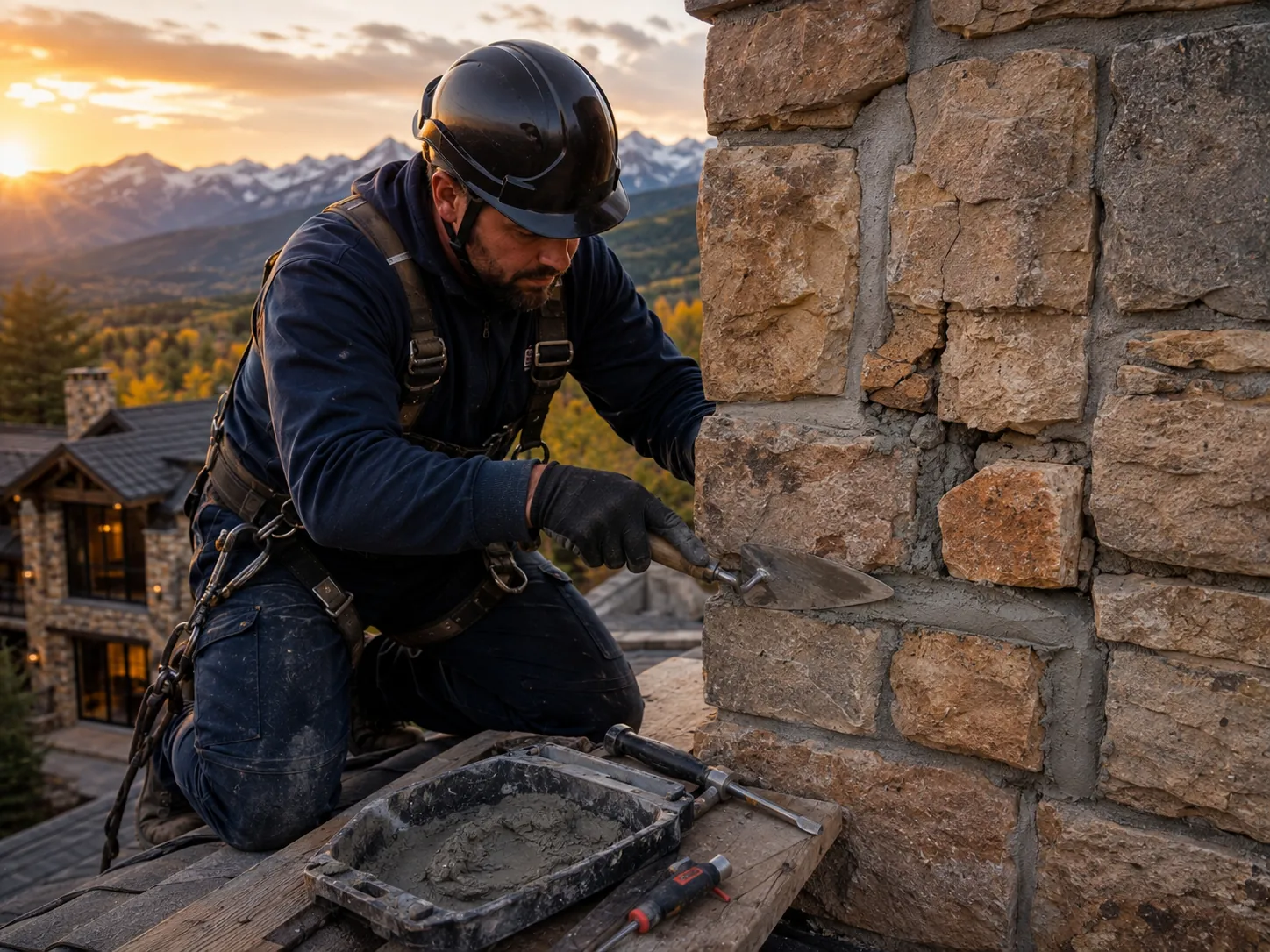
Repointing can replace failed mortar between otherwise serviceable bricks.
Limited spalled brick
Individual damaged bricks or a small section may be replaceable.
Crown damage
A cracked or deteriorated crown may be repaired or rebuilt without rebuilding the chimney body below it.
Flashing leaks
Roof flashing can often be repaired independently of the masonry structure.
Chimney cap problems
Replacing a damaged cap is usually a separate project.
Certain liner defects
Depending on the system, relining or specialized repair may address internal flue issues without rebuilding the exterior chimney.
When rebuilding may become necessary
A partial or more extensive rebuild may be appropriate when:
- - Many bricks are deeply spalled or loose
- - Mortar deterioration is widespread and deep
- - The chimney is leaning or unstable
- - Large cracks indicate movement
- - The upper chimney has lost structural integrity
- - Previous patching has left little sound masonry
- - Water damage has progressed through a large section
The scope may range from rebuilding only the courses above the roofline to reconstructing a larger portion.
Why “rebuild” can mean different things
Always ask what part of the chimney is being rebuilt.
One contractor may use “rebuild” to describe removing and reconstructing the top four feet. Another may mean taking down the entire exterior stack. Those are completely different projects.
A written proposal should define the limits clearly.
The importance of finding the cause
If masonry deteriorated because of a failed crown or chronic water intrusion, rebuilding brick without fixing the water source may simply start the same cycle again.
A repair plan should consider:
- - Crown
- - Cap
- - Flashing
- - Brick
- - Mortar
- - Water absorption
- - Liner condition
- - Structural movement
How to evaluate a large rebuild proposal
Ask for:
- - Photos of the damaged areas
- - An explanation of why repair is not sufficient
- - The exact height or section to be removed
- - Materials that will be replaced
- - How the crown and cap will be finished
- - How flashing will be handled
- - Whether matching brick is available
- - Whether a permit is required locally
If the project is substantial, a second opinion is reasonable.
Colorado conditions and partial rebuilds
The portion above the roofline is often the most weather-exposed section of a chimney. That means Colorado freeze-thaw damage may be concentrated at the top even while masonry below the roof remains sound.
In those cases, an above-roof rebuild may be enough. In other homes, chronic leakage may have affected a larger area.
Cosmetic cracks versus structural problems
Not every crack means structural failure.
Vertical or stair-step cracks, separation from the building, leaning, and widespread loose masonry deserve careful evaluation. Small surface cracks or isolated mortar defects may have much simpler repairs.
Bottom line
Many chimneys can be repaired without a complete rebuild. The correct scope depends on how much masonry remains sound and whether the source of deterioration can be corrected. A good proposal should define exactly what is being removed, what is being repaired, and why.
Related Saturn services
Good to know
Frequently asked questions
Yes, when deterioration is limited to the upper section and the masonry below remains sound.
No. Repointing replaces deteriorated mortar in existing masonry; rebuilding removes and reconstructs brickwork.
Leaning, major cracking, widespread loose brick, or significant separation should be evaluated promptly by an appropriate professional.
For a large project, comparing documented opinions and scopes can help you understand whether the proposed work is appropriate.
Keep reading