Wood Burning
Do Fireplace and Wood-Stove Installations Require Permits in Colorado?
Permit requirements vary by city. Learn what Colorado homeowners should verify before installing or replacing a fireplace, wood stove, insert or venting system.
Fireplace and wood-stove installation is not just a matter of choosing an appliance and connecting a pipe. The appliance, venting, clearances, floor protection, fuel type and local permit requirements all need to line up.
Colorado does not have one simple permit rule that applies identically to every city and every fireplace project. Requirements can vary by municipality and by the type of appliance being installed.
That is why permit research should happen before installation begins.
Fort Collins provides a clear example
The City of Fort Collins lists fireplaces, fire pits, wood-burning stoves and gas/wood-burning appliances among its permit categories. Its wood-burning stove guidance states that a building permit is required to install a wood-burning stove, pellet stove or masonry heater in the city.
The city also requires listed appliances to be installed according to their listing and applicable standards.
This is a good illustration of why homeowners should not assume a freestanding stove or insert is a permit-free project.
What about Denver or Colorado Springs?
Requirements can depend on whether the project involves a new appliance, gas piping, electrical work, chimney construction, liner installation, structural modification or a change in fuel type.
Because codes and administrative procedures can change, verify the current requirement with the local building department for the exact address and project scope before work starts.
Manufacturer instructions matter too
A permit does not replace the appliance listing. A listed stove, insert or factory-built fireplace is intended to be installed according to the manufacturer's instructions.
Those instructions may address chimney type, liner size, clearances to combustibles, hearth protection, termination requirements and special high-altitude considerations.
Ignoring the installation manual can create problems even when the workmanship looks neat.
Why liners often become part of the conversation
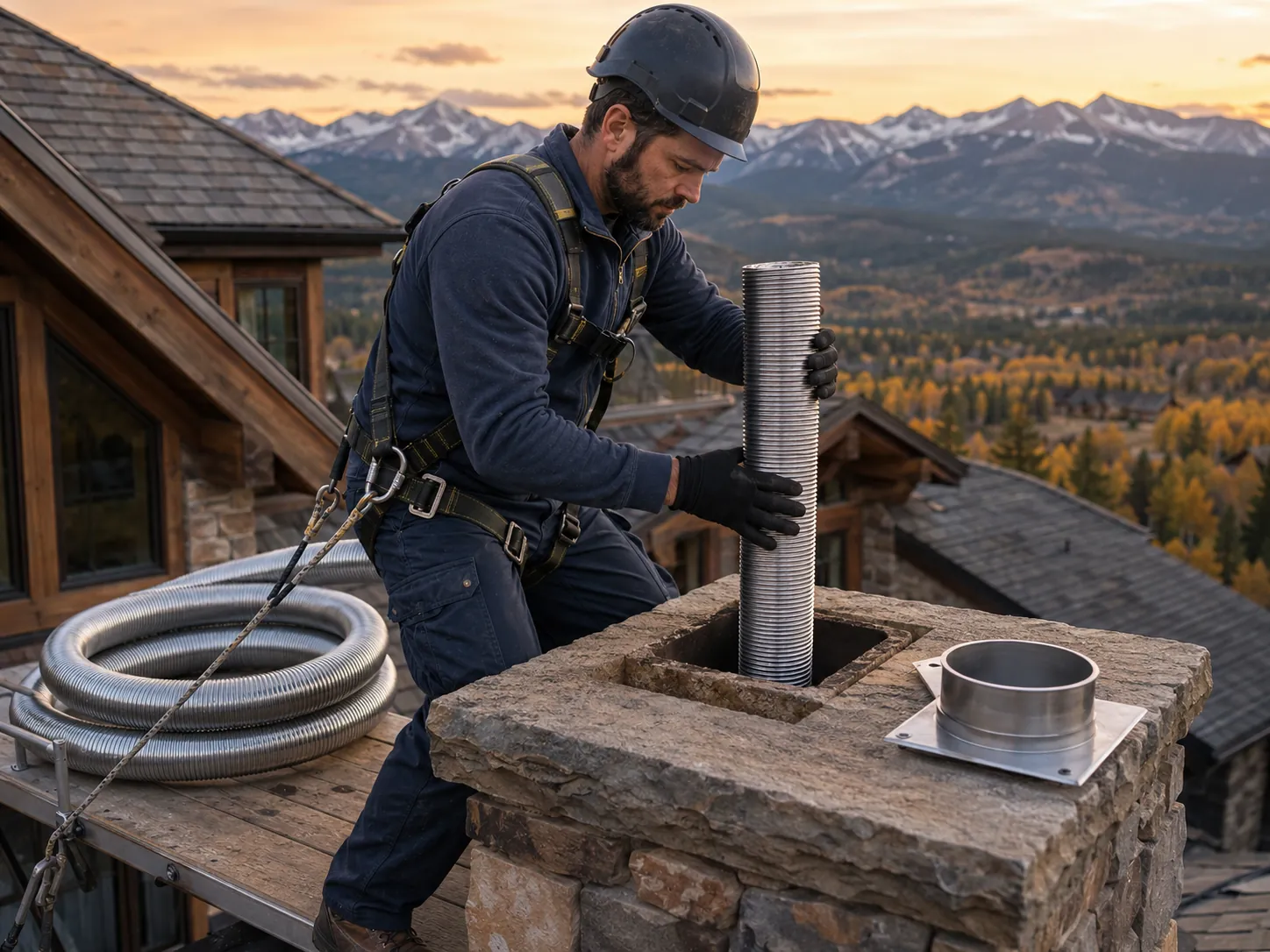
When a new appliance is connected to an existing masonry chimney, the old flue may not be the correct size or configuration for the new appliance.
A liner may be required by the appliance listing, code conditions or system design. The need should be explained using the specific appliance and chimney—not as a blanket statement that every installation requires the same liner.
Gas fireplace installation can involve multiple trades
A gas fireplace or insert may involve gas piping, electrical power, venting and finishing work. Depending on jurisdiction and scope, separate inspections or permits can apply.
The project should be planned so the venting system is not treated as an afterthought.
High altitude should be checked against the appliance manual
Many fuel-burning appliances include altitude-related instructions or derating requirements. The exact rule depends on the product and fuel type.
Colorado's elevation makes this worth checking before purchase, not after installation.
Homeowners should ask these questions before signing a proposal
Is a permit required for this address and scope?
Who is responsible for obtaining it?
Is the appliance approved/listed for the intended installation?
Does the existing chimney need a liner, and why?
Are gas, electrical or structural changes included?
What inspection is required before final use?
Will the installer provide the appliance manual and final documentation?
Why unpermitted work can become a future problem
Even when an appliance appears to operate normally, undocumented installation can create complications during resale, insurance review, remodeling or a later safety inspection.
Correcting a noncompliant installation after finishes are complete is often more difficult than planning it correctly from the beginning.
Bottom line
Permit requirements for fireplaces and wood-burning appliances vary across Colorado, but homeowners should expect installation to involve code, manufacturer and local-jurisdiction requirements.
Verify first, install second.
Saturn Chimney & Fireplace provides fireplace, chimney and venting installation services throughout Denver, Colorado Springs, Fort Collins and surrounding Colorado communities.
Related Saturn services
Good to know
Frequently asked questions
Yes. City guidance states that a building permit is required for a wood-burning stove, pellet stove or masonry heater.
No. Requirements vary by jurisdiction and project scope, so verify with the local building department.
Not automatically. Flue size, condition, liner requirements and the appliance listing must be evaluated.
That depends on the jurisdiction and contract. The proposal should clearly state who is responsible.