
Inspections
Buying a Colorado Home With a Fireplace? Read This Before You Use It
Before lighting the first fire in a newly purchased Colorado home, learn what to check in the chimney, fireplace, cap, liner, masonry, and venting system.
A fireplace can be one of the features that makes a Colorado home feel right. But when you buy a house, you also inherit the fireplace's maintenance history - or lack of it.
Before lighting the first fire, it is worth learning what system you actually have and when it was last evaluated.
Do not assume the home inspection covered everything
A standard home inspector may identify visible fireplace concerns, but the scope is different from a dedicated chimney inspection.
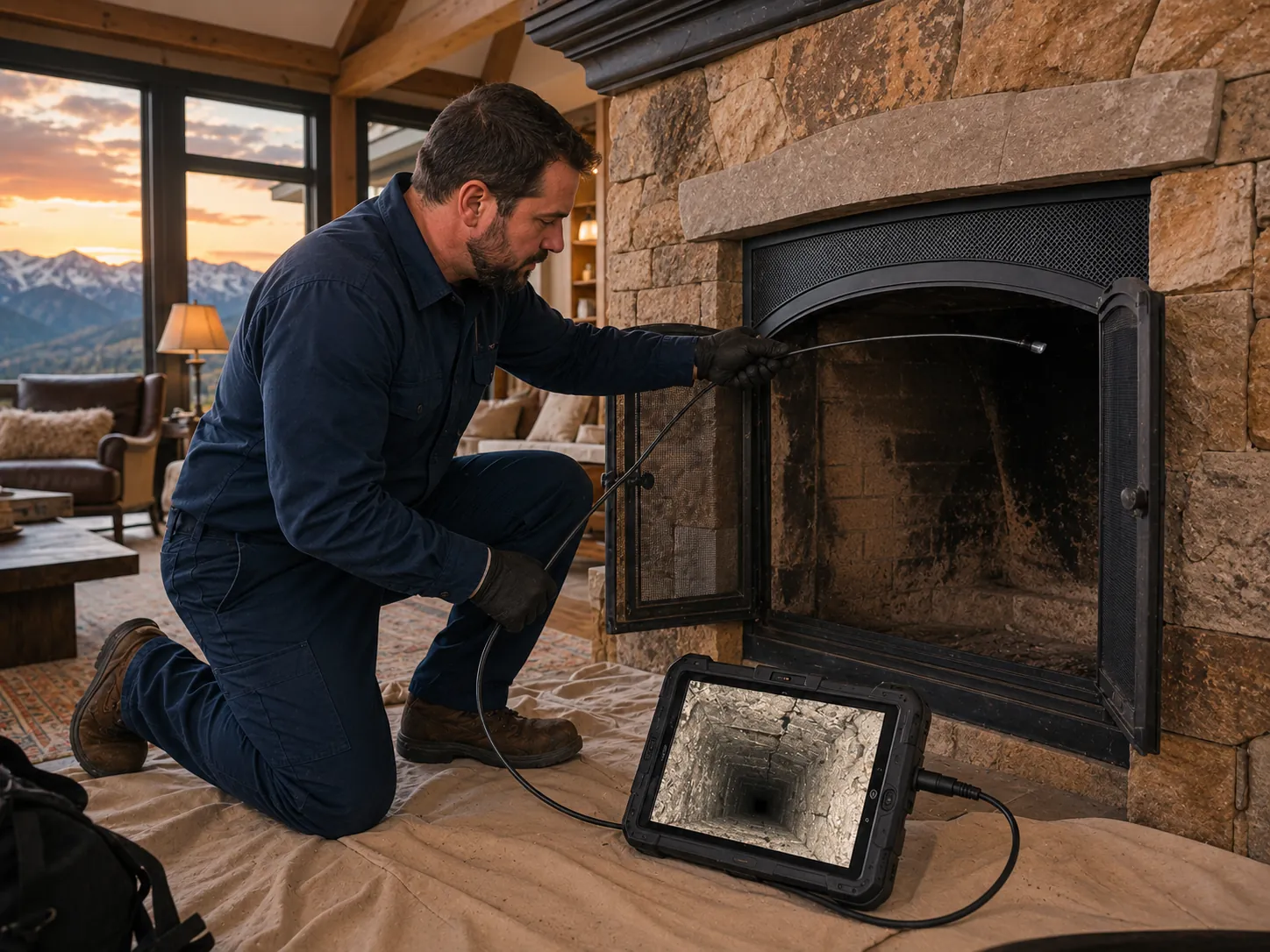
The interior of a flue can contain cracks, deposits, missing joints, obstructions, or previous repair work that cannot be evaluated from the firebox alone.
If the fireplace was important to your purchase decision, consider a chimney-specific inspection during the transaction or before first use.
Ask the seller for history
Useful questions include:
- - When was the chimney last inspected?
- - When was it last cleaned?
- - Was there ever a chimney fire?
- - Have there been leaks around the chimney?
- - Has the flue been relined?
- - Were the fireplace or heating appliances changed?
- - Are there invoices, permits, or warranties for prior work?
“No records” does not prove there is a problem. It simply means you should start with a fresh baseline.
Identify the fireplace type
The home may have:
- - Traditional masonry wood-burning fireplace
- - Factory-built wood fireplace
- - Gas insert
- - Direct-vent gas fireplace
- - Wood stove or insert
- - Pellet appliance
- - Decorative gas logs
Each system has different components and service requirements.
Look at the exterior chimney
From a safe ground position, check for:
- - Missing or damaged cap
- - Leaning
- - Spalled brick
- - Open mortar joints
- - Large crown cracks
- - Rusted chase cover
- - Obvious flashing defects
Do not climb onto a roof simply to inspect a chimney if you are not equipped to do so safely.
Check for water history
Look for ceiling stains, peeling paint, rust around the damper, damp odors, white mineral deposits, or staining in the firebox.
Colorado snow and freeze-thaw cycles can turn a small leak into larger masonry damage over time.
Ask about wood-burning restrictions
If the home is in the Denver-Boulder metropolitan area, winter Action Days can trigger mandatory residential burning restrictions for many homes below 7,000 feet, subject to exemptions.
A beautiful wood fireplace may not be available for unrestricted use every winter day. Check current CDPHE advisories and rules rather than relying on what a seller remembers.
If the home is older, look for modifications
Older homes may have undergone multiple heating upgrades. A chimney that originally served one appliance may now serve another - or may be abandoned while the masonry remains in place.
Make sure you know which flues are active and what they serve.
If the fireplace has not been used in years
Inactivity is not a safety certificate.
Birds or animals can enter. Caps can deteriorate. Water can damage masonry. Dampers can rust. Debris can collect. An annual inspection baseline is useful even if the previous owner said, “We never used it.”
Bottom line
Treat a fireplace like any other important system in a new home: learn what it is, inspect its condition, and establish a maintenance history before relying on it.
The first cold night after closing is not the ideal time to discover a blocked flue or leaking chimney.
Related Saturn services
Good to know
Frequently asked questions
It can be particularly valuable when the fireplace is regularly used, the system history is unknown, or visible concerns are present.
Not necessarily. Inspection scope varies, so ask the inspector exactly what is included.
Cleaning should be based on inspection findings and deposit level rather than assumption alone.
That history is useful, but it does not replace evaluating current condition when the system is important to you.
Keep reading