
Gas Fireplaces
Wood-Burning vs. Gas Fireplace: Which Makes More Sense in Colorado?
Compare wood-burning and gas fireplaces for Colorado homes, including maintenance, atmosphere, air-quality rules, convenience, venting, and installation.
Choosing between a wood-burning and gas fireplace is not only an aesthetic decision. It changes how you buy fuel, maintain the system, operate the fireplace, and interact with local air-quality rules.
Neither option is universally better for Colorado homes.
Why homeowners choose wood
Wood offers:
- - Traditional flame and sound
- - Ability to use locally sourced firewood
- - Strong visual character
- - A hands-on fireplace experience
For many homeowners, those qualities are the entire reason to own a fireplace.
The maintenance side of wood
Wood-burning systems require attention to:
- - Creosote
- - Ash
- - Firewood storage
- - Chimney sweeping when needed
- - Annual inspection
- - Cap and liner condition
- - Burning technique
Dry firewood and hot, clean fires help reduce smoke and deposits.
Denver-area air-quality restrictions
Wood-burning homeowners in the Denver-Boulder metro area should understand winter Action Day restrictions.
Depending on location, elevation, appliance certification, and other exemptions, wood burning may be prohibited on certain high-pollution days.
This can be an important lifestyle consideration for someone choosing a new system.
Why homeowners choose gas
Gas offers:
- - Push-button or remote operation
- - No firewood storage
- - No wood ash
- - Consistent flame control
- - Easier short-duration use
For homeowners who want a fire for an hour after dinner without building and tending it, gas can be attractive.
Gas still needs maintenance
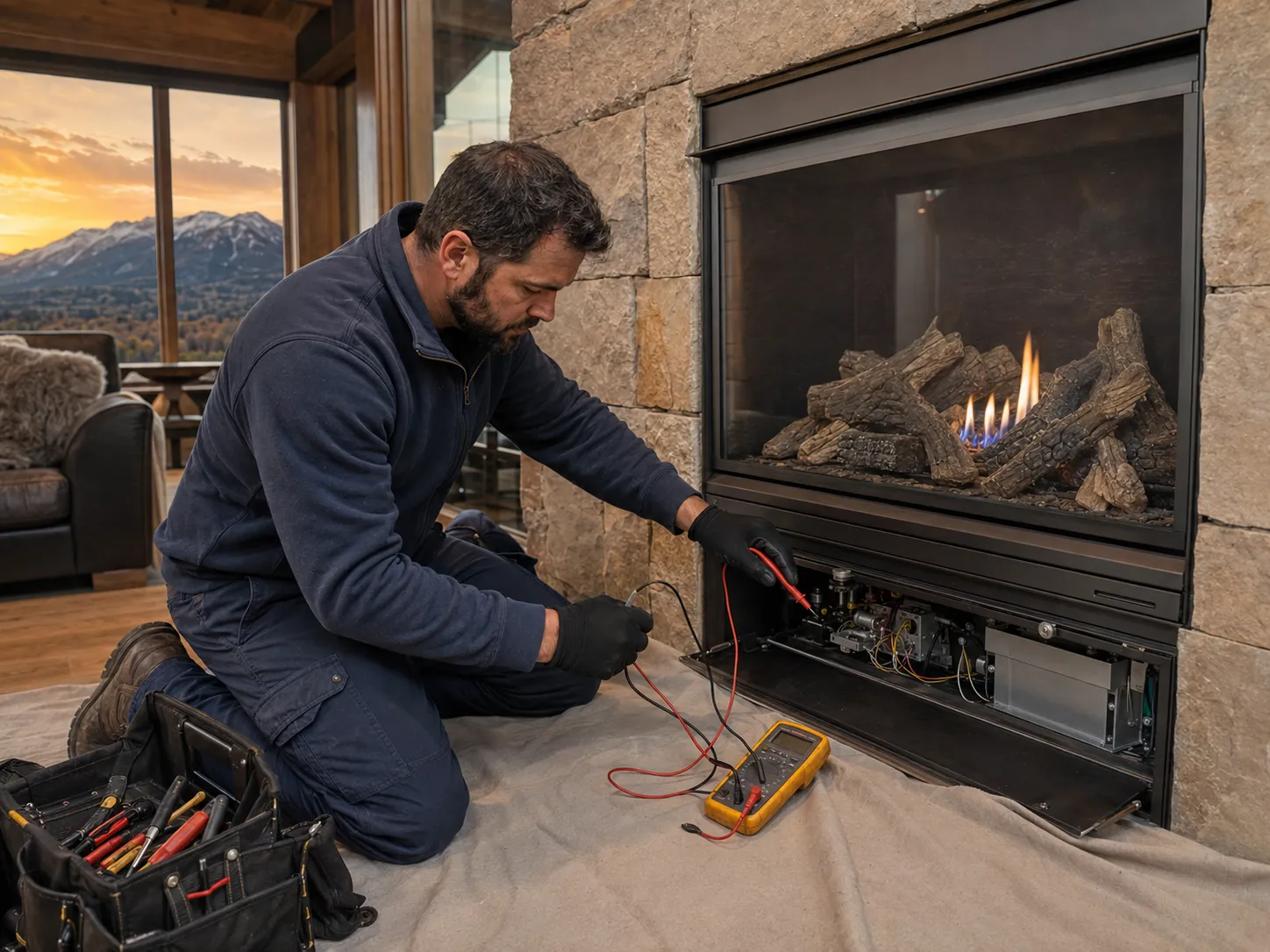
Gas fireplaces have burners, controls, pilots, sensors, glass, gaskets, and venting systems.
They do not create wood creosote, but they should still be inspected and maintained according to manufacturer instructions.
What about heat output?
Performance varies enormously by appliance.
An open masonry wood fireplace can lose substantial room air up the chimney. A modern wood insert or gas fireplace may be designed to provide much more usable heat.
Compare actual appliance ratings and efficiency information rather than fuel type alone.
Installation considerations
A home with an existing masonry chimney may support several options, but conversion is not always simple.
Gas may require:
- - Gas piping
- - Electrical power
- - Approved venting
- - Permit and inspection
Wood installations require proper chimney, clearances, hearth, and listed components.
Bottom line
Choose wood if the traditional fire experience is worth the maintenance and local burning considerations. Choose gas if convenience and control matter more. For either option, the appliance and venting system need to be properly matched to the home.
Related Saturn services
Good to know
Frequently asked questions
Fuel costs vary by utility rates, wood source, appliance efficiency, and usage. There is no universal answer.
No. Action Day restrictions can limit residential wood burning in the Denver-Boulder metro area, subject to exemptions.
It eliminates wood creosote but not vent inspection, appliance maintenance, or weather-related exterior issues.
The specific appliance design matters more than a simple wood-versus-gas label.
