
Cleaning
Can I Clean My Own Chimney?
DIY chimney sweeping is possible in some systems but involves roof, soot, inspection, and fire-safety risks. Learn what homeowners should consider first.
Chimney brushes are easy to buy, and online videos can make sweeping look straightforward. For a simple, straight flue, a skilled homeowner may be able to remove loose soot and ordinary deposits.
The bigger question is whether cleaning alone answers what you need to know.
Sweeping and inspection are different skills
Running a brush through the flue may remove deposits. It does not automatically identify:
- - Cracked liners
- - Open joints
- - Water damage
- - Incorrect clearances
- - Cap problems
- - Chimney-fire damage
- - Structural masonry defects
A professional service combines cleaning technique with evaluation of the venting system.
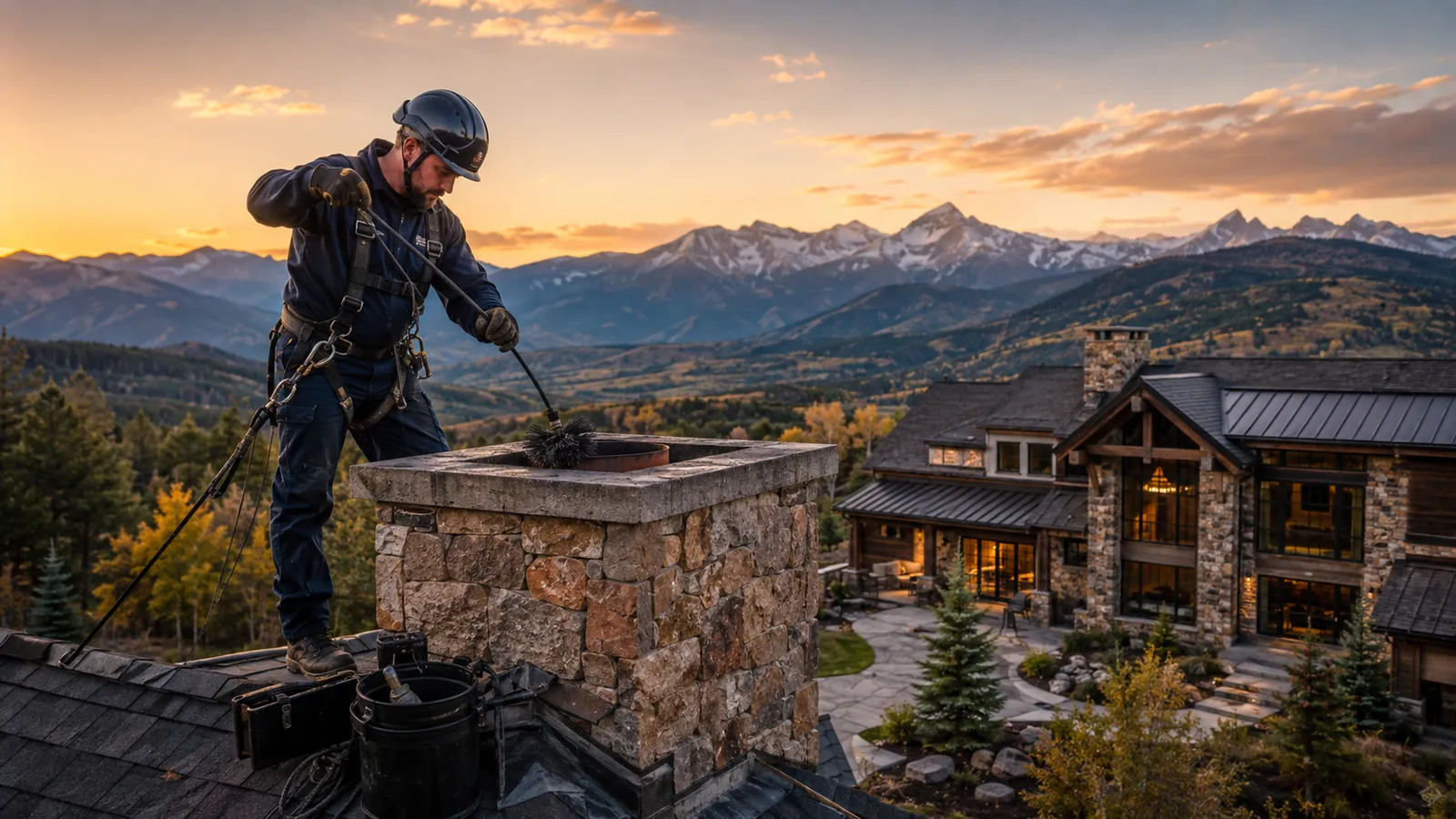
Roof safety is a major concern
Many chimneys are safest to clean or inspect from a roof or with specialized bottom-up equipment.
Steep pitch, ice, snow, wet shingles, multiple stories, and awkward ladder placement make roof work hazardous. Colorado weather can change quickly, and chimney service is not worth a fall.
If safe access is questionable, stop there.
Soot containment matters
Fine soot can spread through a home quickly.
Professional sweeps use vacuums, covers, and containment methods designed for chimney dust. A household vacuum may not be appropriate and can redistribute fine particles.
You need the correct brush and technique
Flue size and material affect tool choice. A brush that is wrong for the liner can clean poorly or potentially damage some systems.
Factory-built chimneys, stainless liners, clay tiles, and specialized systems may have different cleaning requirements.
Glazed creosote is not a normal DIY cleaning job
Hard, shiny, tar-like creosote can resist standard brushing. Mechanical or chemical removal methods may require training and specialized equipment.
If you see heavy glaze, stop treating the job like routine soot removal.
What about bottom-up cleaning kits?
Flexible rotary systems can reduce the need to stand on the roof, but they still do not eliminate containment, tool-selection, or inspection issues.
Use tools only as directed and avoid assuming that “the brush went all the way through” means the chimney is safe.
A reasonable DIY boundary
Homeowners can safely handle many fireplace-maintenance tasks:
- - Removing cooled ash
- - Checking smoke and CO alarms
- - Storing dry firewood correctly
- - Looking for visible water stains
- - Watching for cap or masonry damage from the ground
Internal flue inspection, roof access, heavy creosote removal, and repair are often better left to trained professionals.
Bottom line
DIY chimney cleaning is not automatically impossible, but it has more risk and complexity than brushing a pipe. If the system is unfamiliar, difficult to access, heavily coated, or due for a condition inspection, professional service can provide much more than deposit removal.
Related Saturn services
Good to know
Frequently asked questions
Some cleaning systems are designed for bottom-up use, but tool suitability depends on the flue and deposits.
Fine soot requires appropriate filtration and containment. An unsuitable vacuum can spread particles into the room.
Visual confirmation can be difficult without proper lighting or camera equipment, especially in flues with offsets.
Annual maintenance includes inspection of condition, not only brushing deposits.

